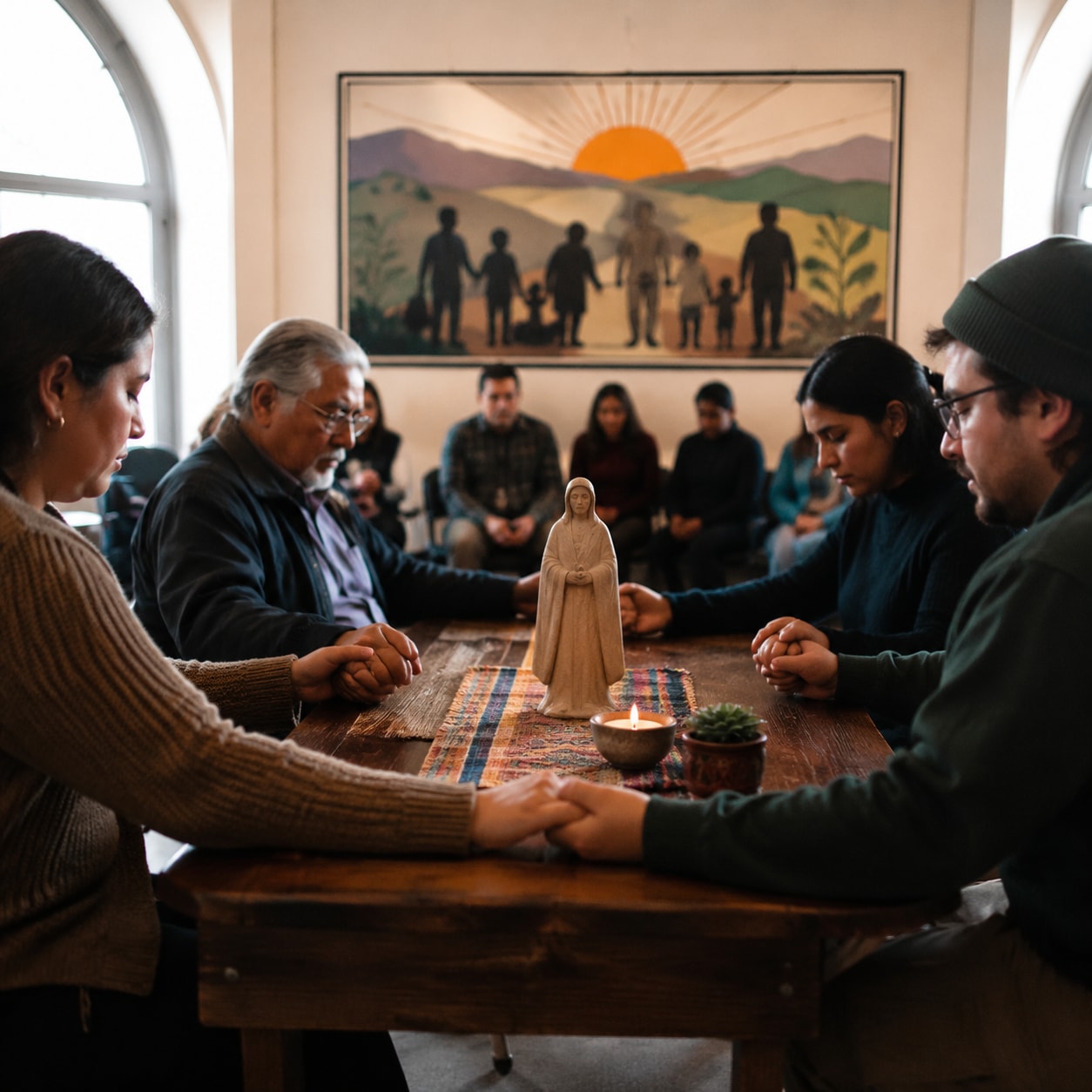
A source-based guide to immigration policy context, family preparedness, rapid response, legal services, congregational safety, human-rights advocacy, and immigrant-led organizing in the United States.
How to Use This Immigration Reform and Sanctuary Resource Guide
Immigration reform and sanctuary work spans policy questions, practical support, community preparation, and organizing. Use this guide first to identify the kind of help your community needs: family preparedness, rapid response, accompaniment, legal services, congregational safety, or an organizing connection.
Treat every resource as a starting point rather than a guarantee of current assistance. The cited Bay Area collection has a regional focus, while federal materials serve a different purpose and audience. Service areas, contact details, eligibility rules, and government policies can change. Confirm them directly with the responsible organization or agency before acting.
Policy descriptions also require date checks. For example, a January 2025 executive order established a refugee-admissions pause and review process, but the supplied evidence does not show what happened after the order’s initial reporting deadlines. This guide therefore describes the documented policy action without treating it as a statement of current law or policy.
For legal questions or an individual immigration matter, consult a qualified local provider rather than relying on a general resource guide.
What Immigration Reform and Sanctuary Work Encompass
Immigration reform is broader than any single visa category, enforcement policy, or legislative proposal. In the supplied materials, the Niskanen Center describes its own policy agenda as expanding participation in refugee sponsorship and resettlement, reforming lawful immigration pathways, strengthening domestic and national security through security initiatives, and rebuilding an effective immigration system. These are that organization’s stated priorities, not a universally accepted definition of reform.
Sanctuary and immigration-justice work can also involve community-based support and protection. Its practical dimensions may include helping families prepare for emergencies, connecting people with legal services, organizing accompaniment, and developing rapid-response pathways. Other dimensions concern the conduct and accountability of border enforcement and the availability of remedies when families allege harm.
The University of California, Berkeley School of Law’s Human Rights Clinic describes a project focused on improving human-rights protections for immigrants in the United States and applying international human-rights standards to domestic policy discussions. That framing shows how immigration debates can extend beyond admission and status rules to questions of government accountability and human dignity.
These strands overlap but are not interchangeable. Policy institutions, legal-service providers, government agencies, faith communities, and immigrant-led organizations may have different roles and perspectives. Readers should identify the specific need at hand before choosing a resource or course of action.
Policy Context and the Limits of Current Evidence
The supplied sources characterize US immigration reform as an area marked by prolonged political disagreement, legislative deadlock, application backlogs, and wider institutional challenges. That context helps explain why readers may struggle to distinguish long-term reform proposals from immediately available services. It also makes dates and attribution especially important: an organization’s preferred reform agenda should not be presented as settled policy.
One documented policy development is the executive order issued by the White House on January 20, 2025. The order directed that, beginning January 27, 2025, refugee entry and decisions on refugee-status applications under the US Refugee Admissions Program be suspended. It also allowed the secretary of state and secretary of homeland security to make joint exceptions on a case-by-case basis.
The order required the homeland security secretary, in consultation with the secretary of state, to report within 90 days on whether refugee entry should resume. It called for additional reports every 90 days until the president determined that resumption was in the interests of the United States.
This evidence establishes what the order required when issued; it does not establish the program’s status today. The research package does not include later reports, court rulings, or a presidential decision to resume admissions. Readers evaluating refugee or immigration policy should therefore check current information from the responsible agencies and qualified service providers. Historical summaries can explain the roots of reform debates, but older status descriptions should not be used as current legal advice.
Resources for Immigrant Families and Local Supporters
For families and supporters in the San Francisco and San Mateo County area, Faith in Action Bay Area’s resource page provides several practical entry points. The page lists rapid-response and accompaniment materials and links to a family preparedness plan, a California rapid-response hotline, and a directory of immigration legal services in Northern California.
A useful way to navigate these materials is by need:
– Family preparedness: Look for planning materials intended to help a household prepare before an emergency occurs. – Rapid response: Confirm the current hotline, its operating area, hours, and the situations it handles. – Accompaniment: Ask the organizing group what accompaniment involves, who can participate, and what training or coordination is required. – Legal services: Use the Northern California list as a starting point, then confirm that a provider handles the relevant type of matter and is currently accepting inquiries.
The geographic limitation matters. A Bay Area or Northern California directory should not be assumed to serve someone elsewhere in California or another state. Even within the listed counties, availability and contact information may change.
Before sharing a resource with a family, verify it directly with the listed provider. Determine whether the service is free or fee-based, which languages are supported, what area it covers, and whether any eligibility or appointment requirements apply. General resource pages can help people find the next appropriate contact, but they do not replace individualized legal assistance.
Preparation and Safety Resources for Faith Communities
Faith communities may need to balance an open, welcoming environment with preparation for targeted violence, terrorism, facility-security concerns, and unexpected events. The US Department of Homeland Security has assembled training, security guidance, and community resources for faith-community leaders addressing those risks. Its collection also includes an entry point for information about immigration relief in emergent or unforeseen circumstances.
Congregational leaders can use these federal materials to begin a structured review of their preparedness. Relevant questions include who is responsible for monitoring official guidance, how leaders communicate during an emergency, and which community partners should be contacted when specialized support is needed. Any plan should reflect the congregation’s actual setting and the people it serves.
These resources are starting points, not individualized security assessments or immigration advice. Leaders should verify that a training or guidance document is current and determine whether it applies to their facility and circumstances. Immigration-relief information should likewise be checked with the responsible agency or a qualified legal-service provider before anyone relies on it for a specific case.
Preparation should remain connected to the community’s mission. A safety process can clarify responsibilities and response pathways while leaders continue to evaluate how their practices support an inclusive and welcoming environment.
Human Rights, Border Accountability, and Access to Remedy
Immigration policy also raises questions about human-rights protections and accountability for alleged harms connected to border enforcement. The UC Berkeley School of Law Human Rights Clinic says its related project seeks to improve protections for immigrants within the United States and bring international human-rights standards into domestic policy discussions.
Materials described by the clinic include historical work concerning families affected by alleged border-enforcement harms. A clinic working paper stated that families’ efforts to obtain remedies through the US legal system had largely been unsuccessful. That statement should be read within its documented historical scope: the relevant materials were principally produced from 2015 through 2017 and do not establish the outcome of every case or the full state of remedies today.
For readers, the central distinction is between documenting barriers and determining the options in an individual matter. Historical research can illuminate accountability concerns and show why access to remedy is part of immigration-justice discussion. It cannot determine whether a particular person currently has a criminal, civil, administrative, or other claim.
Anyone seeking relief for a specific alleged harm should obtain current, qualified legal guidance. Advocates and educators using the clinic’s work should preserve its dates, attribute its conclusions, and avoid presenting historical findings as a complete account of current enforcement practices or legal remedies.
Community Organizing and Immigrant-Led Action
People seeking a pathway into collective action can look for organizations that connect affected immigrants, allies, and faith communities. Philadelphia’s New Sanctuary Movement describes its work as including grassroots organizing led by immigrants directly affected by the issues, direct action, capacity building, and relationship-building between immigrant and allied communities.
That model offers several possible points of entry. A person might learn about immigrant-led priorities, support capacity-building work, participate in an organization’s approved actions, or help strengthen relationships among immigrant, supporter, and faith groups. The appropriate role depends on the organization’s practices and the needs identified by affected communities.
This is one organization’s stated approach rather than a universal template for sanctuary work. Its Philadelphia base also means readers elsewhere should not assume that its activities or services are available in their location. Before participating, confirm the organization’s current programs, geographic reach, expectations for volunteers, and any required preparation.
A sound first step is to listen to the priorities communicated by immigrant-led groups and ask what form of support is useful. Readers should then verify the group’s current information directly and choose a role that matches their location, capacity, and responsibilities.
A Verification Checklist Before You Act
Use this checklist before relying on or sharing an immigration reform or sanctuary resource:
– Location: Confirm the cities, counties, or states the provider serves. Do not assume a Bay Area or Northern California resource operates nationwide. – Current contact information: Check the responsible organization’s current page or official channel for phone numbers, hours, and intake instructions. – Type of support: Determine whether the resource provides preparedness materials, rapid response, accompaniment, legal services, security guidance, immigration-relief information, or organizing opportunities. – Eligibility and availability: Ask whether restrictions, appointments, fees, language limitations, or capacity constraints apply. – Policy date: For government action, identify the issue date and look for later agency updates, reports, court decisions, or superseding directives. – Professional guidance: Refer individual legal or security questions to a qualified local provider rather than treating general information as tailored advice. – Organizational perspective: Attribute policy proposals and advocacy positions to the organization presenting them. – Participation expectations: Before joining an action or volunteer program, confirm its geographic scope, leadership, training, and current needs.
Identify the category and location relevant to your community, verify the details directly, and connect with a qualified local service provider or immigrant-led organization before acting.
Disclosures and limitations
– This article was prepared with AI assistance and should receive human editorial review before publication. – The article is based only on the supplied research package, including materials attributed to government agencies, academic researchers, policy institutions, and advocacy organizations. Organizational positions are presented as attributed views rather than uncontested facts. – Immigration policies, legal-service availability, contact details, and geographic coverage may change. Readers should verify current information directly with the responsible agency or organization and seek qualified legal advice for individual matters. – No products, affiliate links, or commercial recommendations are included. Any future addition of affiliate relationships should be clearly disclosed.
Sources
– Immigration reform in the United States – Wikipedia — en.wikipedia.org – Promoting Human Rights in the United States — UC Berkeley Law – IMMIGRATION RESOURCES | Share resources with your community — Faith In Action Bay Area — Faith In Action Bay Area – Realigning the United States Refugee Admissions Program — The White House – U.S. Immigration News & Policy Reform | DACA, Refugees, Green Cards — Niskanen Center – Resources for Leaders of Faith-Based Communities, Organizations, and Institutions | Homeland Security — U.S. Department of Homeland Security – US immigration – BBC News — bbc.com – New Sanctuary Movement of Philadelphia – Interfaith Immigrant Justice — sanctuaryphiladelphia.org – Vyberte místo v oblasti District of Columbia — foreca.cz – Federation for American Immigration Reform – Wikipedia — en.wikipedia.org