
Communities can prepare for the midterm election without supporting a candidate or party by helping people understand the ballot, access voter resources, participate in fair public forums, and engage across differences. Local deadlines and rules must always be confirmed with the relevant official election authority.
What Communities Should Know About the Midterm Election
U.S. midterm elections occur near the midpoint of a president’s four-year term, on the Tuesday after the first Monday in November. All 435 U.S. House seats and either 33 or 34 of the 100 U.S. Senate seats are regularly contested during a midterm.
The ballot may extend well beyond Congress. Depending on the jurisdiction, voters may also encounter races for governor, state legislature, and municipal offices, along with initiatives referred by citizens or legislatures. This mix makes advance preparation useful: organizers can help community members recognize the levels of government represented without telling them how to vote. Because the supplied sources do not establish local deadlines or procedures, confirm every operational detail through the appropriate official election authority.

Set Clear Boundaries for Nonpartisan Engagement
Begin by writing down the purpose of the effort: support informed civic participation without endorsing or opposing candidates or parties. Give volunteers defined roles, such as sharing neutral voter information, coordinating an educational event, or helping participants find election resources.
The United Church of Christ describes its 2026 Our Faith, Our Vote Election Engagement Toolkit as a nonpartisan resource for faith communities. Its subjects include voter empowerment, candidate forums, civil discourse, youth and college participation, issue summaries with action steps, and guidelines concerning church political engagement. Organizers can review that guidance before choosing activities, then establish consistent ground rules for speakers, volunteers, publicity, and questions. The cited material documents the availability of guidance; it is not a substitute for legal advice or rules applicable to a particular organization.
Build a Practical Community Action Plan
Turn preparation into a manageable sequence:
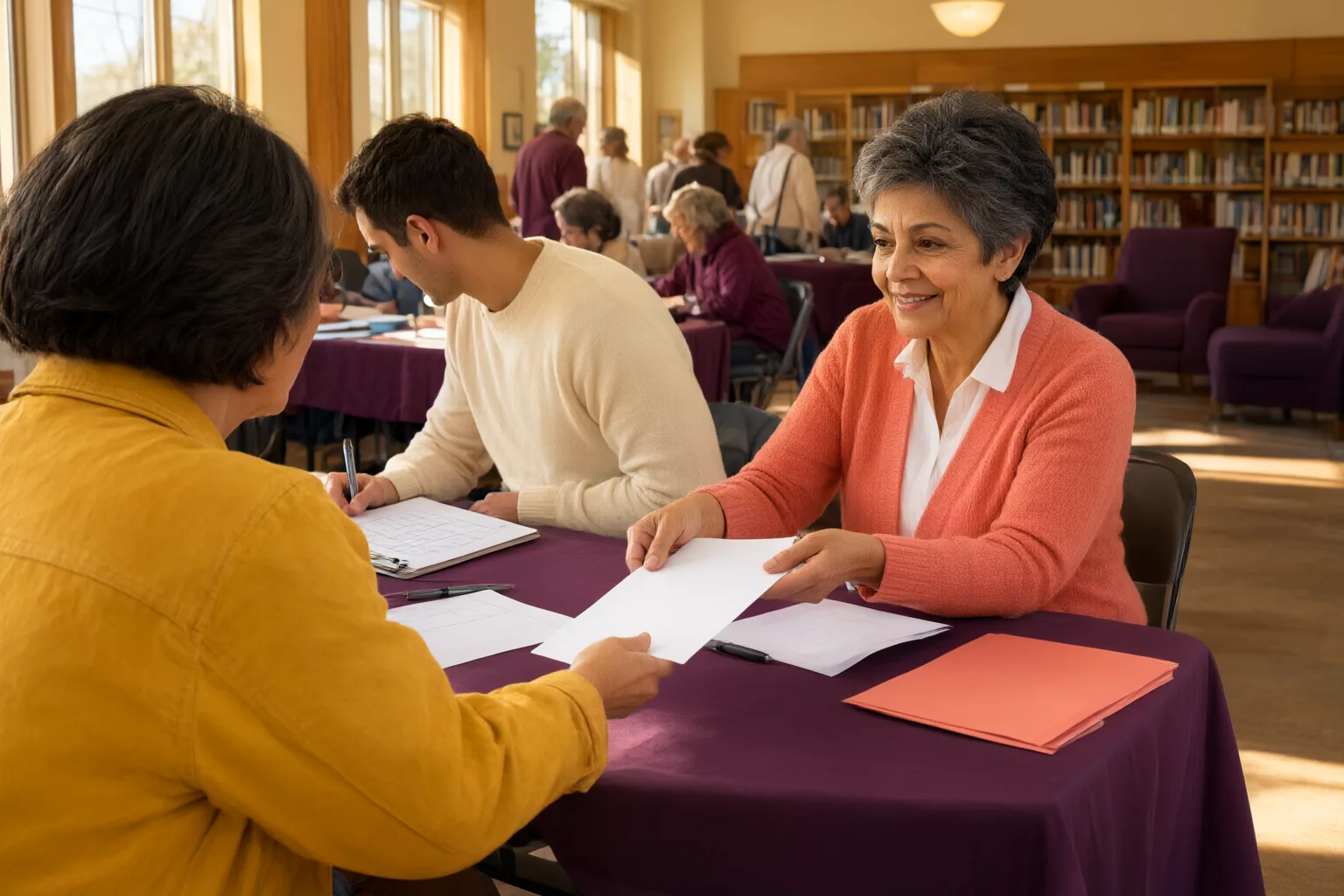
- Choose one activity. Select a voter-empowerment effort, candidate forum, civil-discourse gathering, or youth-focused activity that matches available volunteers and time.
- Define a neutral format. For a forum, document how invitations, speaking time, questions, and moderation will be handled consistently. Keep voter assistance separate from advocacy for a candidate or party.
- Prepare participants. Explain that a midterm ballot can combine federal, state, local, and initiative contests. Encourage people to review the full ballot rather than preparing for only the most visible race.
- Connect people with tools. The United Church of Christ Election Center offers ways to check voter registration and find sample ballots. Direct participants to those functions while reminding them to verify jurisdiction-specific information with their official election authority.
- Support constructive participation. Use clear discussion expectations, include youth and college participants where appropriate, and assign volunteers to moderation, resource sharing, and follow-up.
Before publishing any date, location, eligibility rule, or voting instruction, designate someone to verify it against the relevant official source.
Conclusion
A workable readiness checklist is short: define a nonpartisan purpose, choose a bounded activity, assign responsible volunteers, set consistent participation rules, and identify where people can check registration and locate a sample ballot. Also name the person responsible for confirming local information before it is shared.
Start now by choosing one nonpartisan activity your community can support. Assign its volunteer leads, consult the documented election-engagement resources, and verify every local deadline, voting rule, polling detail, and ballot item with the relevant official election authority.
Disclosures and limitations
- This article was prepared with AI assistance from the supplied research package and source notes; no product or affiliate recommendations are included.
- The cited sources do not establish jurisdiction-specific deadlines, polling information, voting rules, or legal advice. Confirm consequential details with the relevant official election authority.
Related reading
- Action Guides for Courageous Community Action
- Justice Campaign Planning: A Practical Guide for Community and Faith-Based Organizers
Sources
- United States midterm election – Wikipedia — en.wikipedia.org
- New Our Faith Our Vote toolkit and resources launch ahead of historic November midterms – United Church of Christ — United Church of Christ
- Topic: 2018 U.S. midterm election — Statista
- US Midterm Elections Study Tour — ussc.edu.au
- Category:Elections in the United States – Wikipedia — en.wikipedia.org