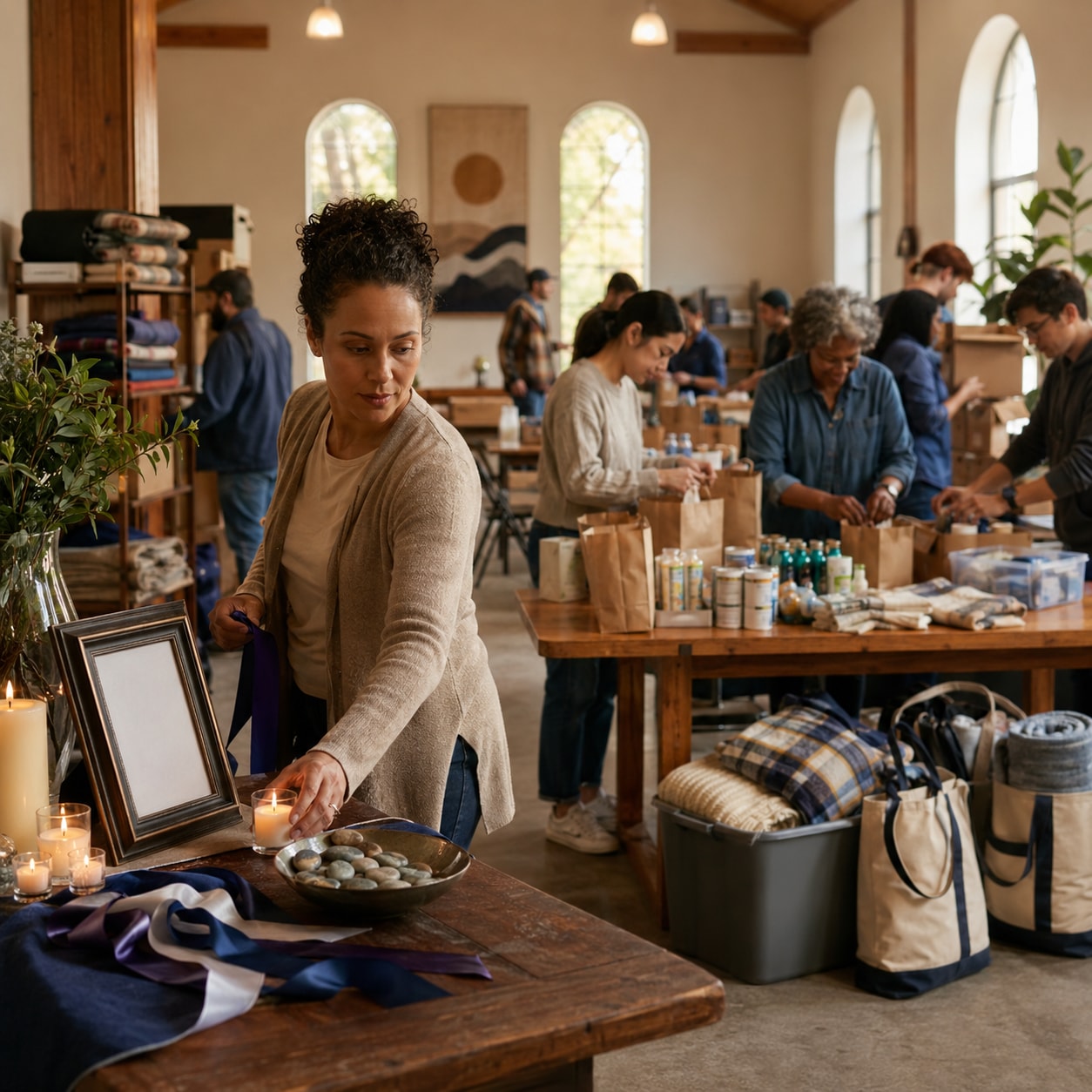
A practical framework for carrying a legacy forward through reflection, kindness, inclusion, service, and commitment to justice.
What It Means to Honor Courageous Love
Courageous love can be understood as care expressed through action: serving others, pursuing justice, building inclusion, offering kindness, and remaining committed to a community’s well-being. This framework draws on two examples of remembrance. Palm Springs Pride recognizes LGBTQ+ community members and allies whose contributions include service, education, professional achievement, and work toward a more inclusive and welcoming Greater Coachella Valley. The Inland Coalition for Immigrant Justice remembers Aidé Arana for courage, kindness, dedication to immigrant rights, commitment to justice, and care for family and others.
Together, these examples suggest that honoring courageous love involves more than admiration. Remembrance can help people identify the values embodied in a life or contribution and decide how to continue them. This is an editorial framework for reflection and participation, not evidence of a current search, news, or cultural trend.
Begin With Learning and Remembrance
Meaningful remembrance begins by learning what a person or group contributed and whom that work served. Palm Springs Pride’s Wall of Honor publicly acknowledges people whose efforts helped make their region more inclusive and welcoming. Such recognition preserves a record of service while showing others the kinds of contributions a community values.
Personal memorials can serve a similar purpose. The Inland Coalition for Immigrant Justice describes Aidé Arana through both her work for immigrant rights and qualities such as courage, kindness, justice, and devotion to others. It then connects her memory with an invitation to spread her kindness and love.
A simple remembrance practice can begin with three prompts:
1. What did this person or community member do? 2. What value did that contribution express? 3. Who benefited from or was supported by it?
The goal is not to reduce a life to a single achievement. It is to listen closely enough to recognize a value that can guide present action. Public recognition and personal remembrance can both help communities acknowledge past contributions while discerning what should be carried forward.
Recognize Both Quiet Service and Visible Leadership
Courage does not have only one public form. Palm Springs Pride presents both quiet service and bold leadership as contributions capable of creating lasting community change. That broad view makes participation more accessible: people do not need the same role, visibility, or capacity to contribute meaningfully.
Visible leadership may involve publicly championing inclusion, educating others, or helping a community focus on change. Quiet service may involve steady care, practical help, or work that supports others without attracting attention. Neither form should automatically be treated as more valuable. What matters is how the contribution serves people and strengthens a more welcoming community.
When honoring courageous love, look beyond the most visible figures. Ask who has offered consistent service, created space for others, shared knowledge, or helped people feel included. Recognizing varied forms of contribution also gives community members more ways to participate. One person may lead publicly; another may provide dependable support. Both can help carry shared values forward.
Reflect on the Values a Legacy Represents
After learning about a person’s contribution, name the values it represents. The supplied examples point to kindness, justice, inclusion, commitment, service, courage, and care for others. Naming a value creates a bridge between a particular legacy and a present decision.
Start with evidence from the person’s actions. Work advancing immigrant rights may express commitment to justice. Efforts to make a community more inclusive and welcoming may embody inclusion and service. Supporting family and other people may demonstrate care and devotion. The value should arise from what is known about the contribution rather than from an idealized story added later.
Then reflect on what the value requires now. If the central value is kindness, who could receive practical care? If it is inclusion, where could participation or welcome be strengthened? If it is justice, what shared concern calls for sustained attention? If it is service, what useful work needs to be done?
This reflection turns remembrance into direction. It does not reproduce another person’s exact role; it identifies a principle that different people can embody according to their own responsibilities and capacities.
Turn Admiration Into a Concrete Act
Admiration becomes actionable when it leads to a specific, realistic commitment. The Inland Coalition for Immigrant Justice connects honoring Aidé Arana with spreading her kindness and love. Palm Springs Pride’s account likewise presents service and leadership as ways people contribute to lasting community change.
Use a short pathway from memory to participation:
1. Choose one person or example of courageous love to honor. 2. Identify one value evident in that person’s life or service. 3. Select one act that expresses the same value. 4. Name who will be served or supported. 5. Decide when the action will happen.
An act aligned with kindness might be direct support for another person. An act aligned with service might be taking responsibility for useful community work. Inclusion might lead to a step that makes participation more welcoming. Justice might lead to supporting or speaking up for a shared concern. The supplied sources support these general categories, but the particular action should be chosen in response to the needs and circumstances of the local community.
Keep the commitment focused enough to complete. A defined act can be more useful than a broad promise because it identifies what will be done and for whom. Afterward, reflect on what the action taught you and whether continued service is appropriate. In this way, remembrance can become an ongoing practice rather than a single ceremonial moment.
Create a Shared Practice for a Congregation or Community
Congregations and community groups can adapt the same remembrance-to-action pathway collectively. Begin by selecting a person or example whose contributions are documented and relevant to the group’s values. Share what is known about the person’s service, leadership, kindness, pursuit of justice, or work for inclusion. Avoid adding unsupported details, and allow the contribution itself to guide reflection.
Invite participants to name the values they see in that example. Make room for different forms of contribution. Palm Springs Pride’s recognition of both quiet service and bold leadership offers a useful principle: a shared practice should not imply that only public-facing work counts.
The group can then choose one common commitment to kindness, service, inclusion, care, or justice. Clarify the action, its intended beneficiaries, the roles participants can take, and when the group will revisit the commitment. Different roles can allow people with varied capacities to contribute.
Close by connecting the action to the legacy being honored. This keeps remembrance from becoming detached from participation and helps the group explain why it chose this particular commitment. The result is a shared practice in which learning leads to reflection, reflection leads to action, and action carries a valued example forward.
Carry Courageous Love Forward
Remembrance can acknowledge what someone contributed while inviting others to continue the values expressed through that contribution. The examples here connect courageous love with service, inclusion, kindness, care, and commitment to justice. They also show that meaningful contributions can include both quiet work and visible leadership.
Choose one person or example of courageous love to honor. Identify the value their life or service represents, then commit to one specific act of kindness, inclusion, service, or justice that carries that value forward. The act need not imitate the original contribution. It should make the remembered value present in the community now.
Disclosures and limitations
– This article was prepared with AI assistance and is based only on the supplied materials from Palm Springs Pride and the Inland Coalition for Immigrant Justice. – The source materials did not provide publication dates, so this article does not claim that the examples are current or evidence of a present trend. – No products are recommended, and no affiliate relationship is represented in this article.
Sources
– Wall of Honor | Palm Springs Pride — Palm Springs Pride – Powertodecide.org Sitemap | Power to Decide — Power to Decide – Honor killing – Wikipedia — en.wikipedia.org – Leading With Honor® — Leading With Honor® – Honor od autorů Thrity Umrigar – Knihy na Google Play — play.google.com – About HONOR Brand – HONOR Global — honor.com – Will Trump’s Political/Military Theater Widen the War? — UPDATE — sonar21.com – Who We Are — Inland Coalition for Immigrant Justice – Honour Our Nature Outreach Programme (HONOR) – YouTube — youtube.com – List of decorations awarded by the United States National Guard – Wikipedia — en.wikipedia.org