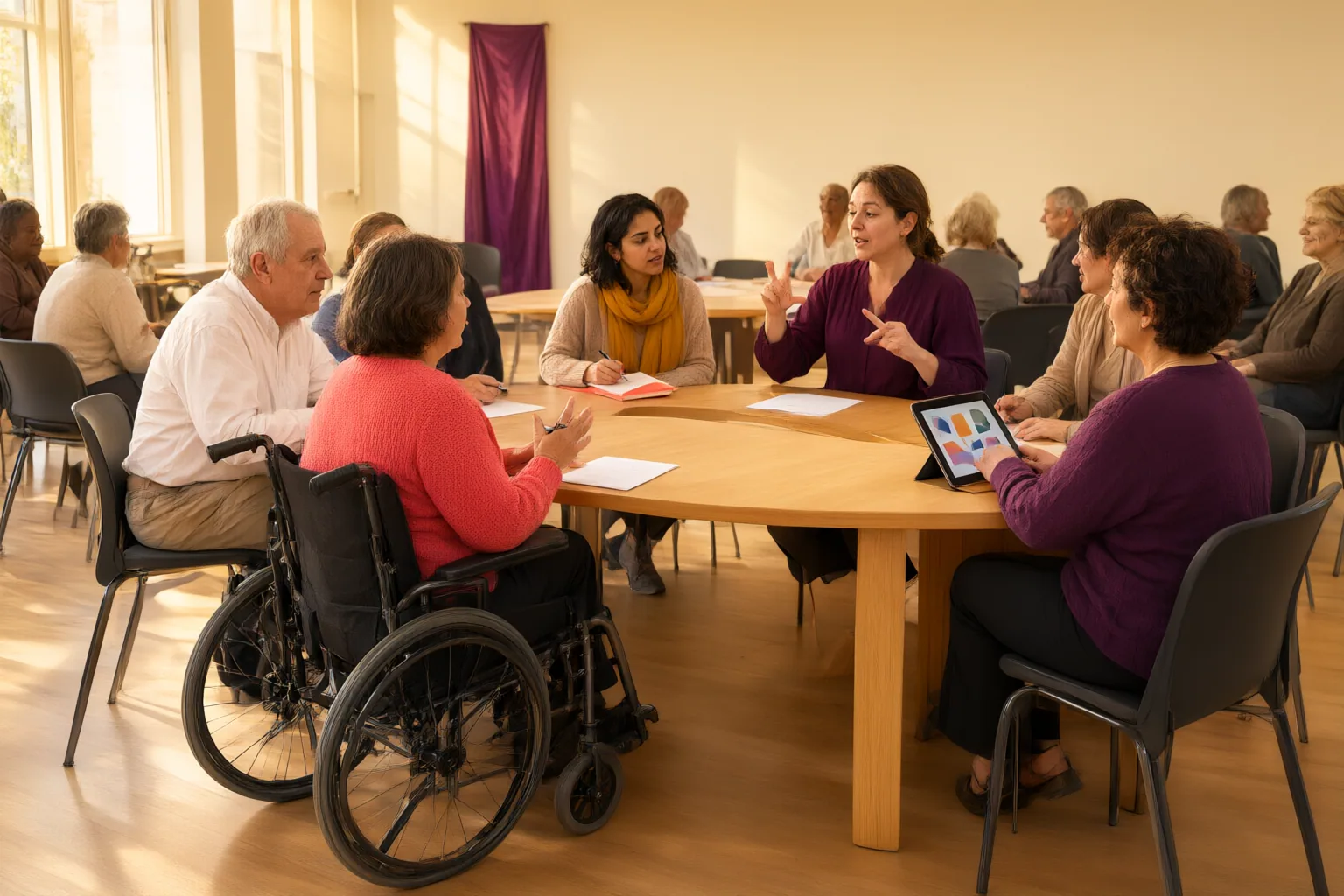
Accessible public-action meetings begin with early accommodation planning, a carefully inspected venue, and communication methods that enable people with disabilities to receive information and participate meaningfully.
Invite Access Requests Early and Respond to Each Person
Include a clear accommodation statement in every invitation and registration form. Name an accessibility contact and provide a direct way to reach that person. This helps participants understand that requests are welcome rather than leaving them to discover an informal process.
Follow up on every request. Ask what will support the person’s participation instead of making assumptions based on a diagnosis or visible disability. Access needs may involve mobility, communication, chronic health conditions, environmental sensitivities, or other circumstances that are not immediately apparent. If a requested accommodation seems unavailable, discuss possible alternatives with the requester before deciding what to provide. Record responsibilities and deadlines so arrangements are confirmed before the meeting.
Inspect the Venue Before the Meeting
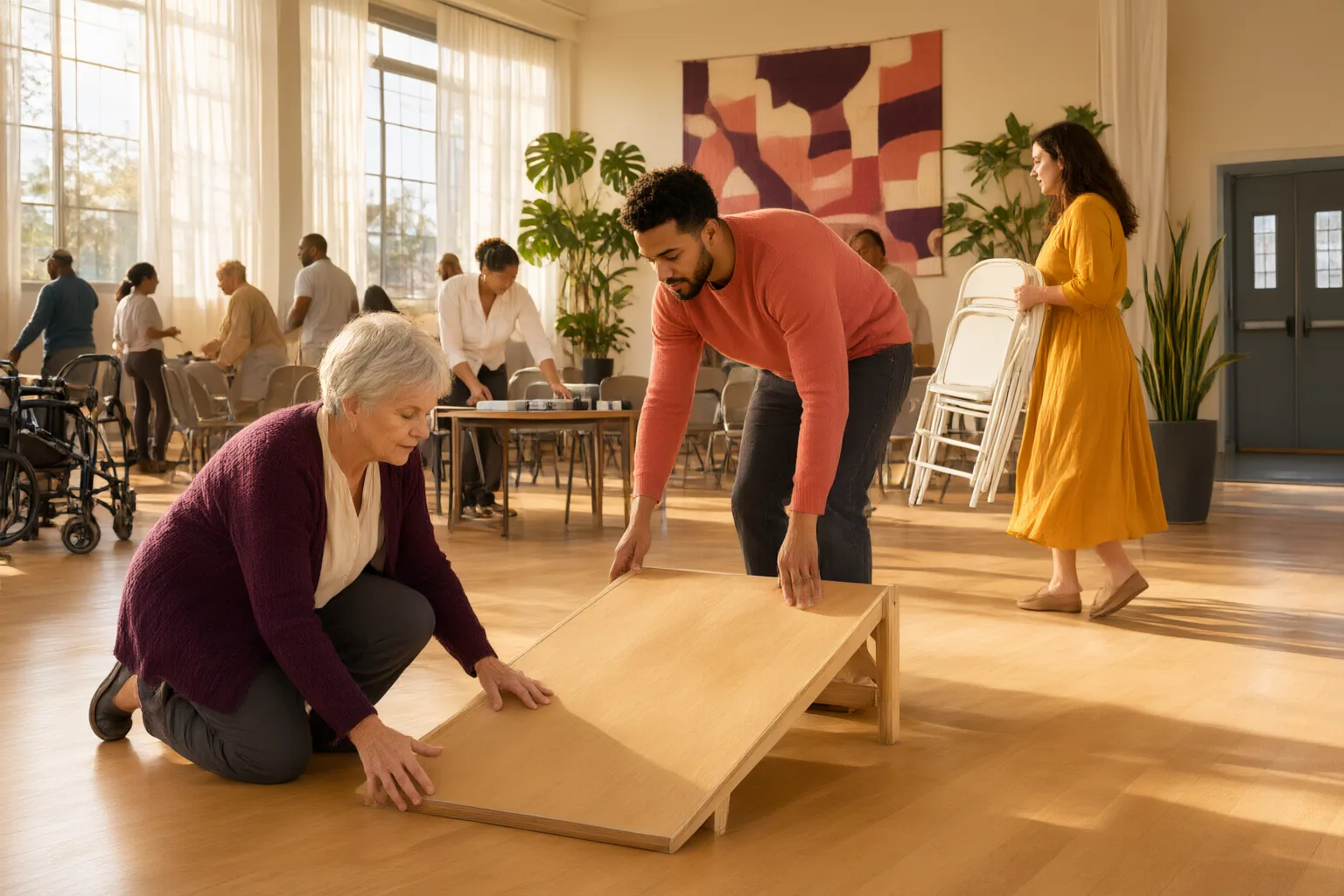
Walk through the venue as a participant would, beginning at accessible parking or a nearby transit stop. Check entrances, ramps or elevators, bathrooms, corridors, doorways, aisles, seating, and presentation areas for barriers. Confirm that the complete route is usable rather than evaluating the meeting room alone.
Also review clear signage, lighting, acoustics, and assistive-listening support. Make sure people can reach seating and essential facilities without encountering blocked or narrow routes. Accessibility standards address barriers in both built environments and information systems, so the inspection should extend beyond a single entrance.
Federal design guidance generally requires covered newly constructed or altered facilities used by public entities to be accessible, subject to applicable provisions and limited exceptions. That general guidance and this practical checklist do not determine the legal obligations of a particular faith community, facility, or event.
Make Communication and Participation Accessible
Physical access is only part of an accessible meeting. DOJ guidance says effective communication depends on the nature, length, complexity, and context of an exchange, as well as the individual’s usual communication method. Applicable Title II and Title III entities, including nonprofit organizations serving the public, must communicate effectively with people who have vision, hearing, or speech disabilities.
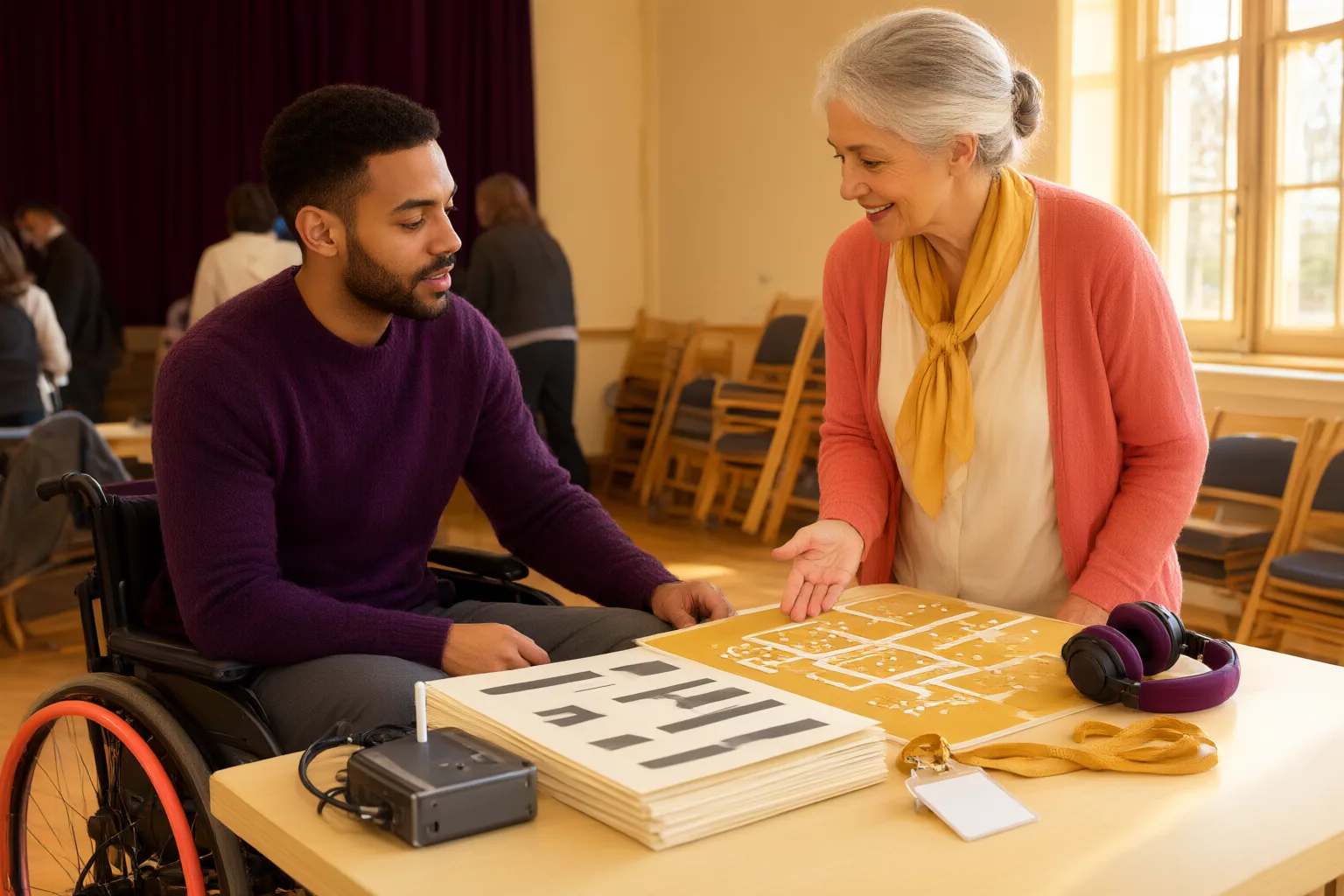
Depending on the meeting and participants, appropriate aids may include qualified readers or interpreters, real-time captioning, assistive-listening systems, accessible electronic information, audio recordings, large print, or Braille. Use microphones consistently, activate captions for video, and repeat audience questions when no roving microphone is available.
Brief presenters before the event. Ask them to provide materials in advance, describe meaningful visual content aloud, and avoid relying on slides as the only source of information. Confirm that remote or hybrid components also support accessible participation. Finally, test equipment and communication arrangements before attendees arrive, leaving enough time to correct problems.
Conclusion
Turn accessibility into a defined pre-meeting process: appoint an accessibility contact, invite requests early, inspect the entire participant route, confirm communication aids, brief presenters, and follow up with requesters. Assign each task to a named organizer and verify arrangements before publishing final logistics.
Federal materials offer general accessibility guidance, not legal advice or a decision about the duties of a particular organization or event. Before announcing your next public-action meeting, use this guide to review the venue and communication plan, publish the access contact, and begin resolving accommodation requests.
Disclosures and limitations
- This article was prepared with AI assistance from the supplied Cornell University, U.S. Department of Justice, and European Commission materials. It provides general planning information, not legal advice.
Related reading
Sources
- Guidance on the 2010 ADA Standards for Accessible Design — ADA.gov
- Accessibility standardisation — European Commission
- Accessible Meeting and Event Checklist – Accessibility Information — accessibility.cornell.edu
- Global Participant Directory – World Movement for Democracy — World Movement for Democracy
- Actionable Steps for Inclusive Leadership — linkedin.com
- Working at CareSource — careers.caresource.com
- Compassion Rising – A Global Movement for Peace & Wisdom | CompassionRising.com — compassionrising.com
- ADA Requirements: Effective Communication — ADA.gov
- NPRM ADAAA — archive.ada.gov