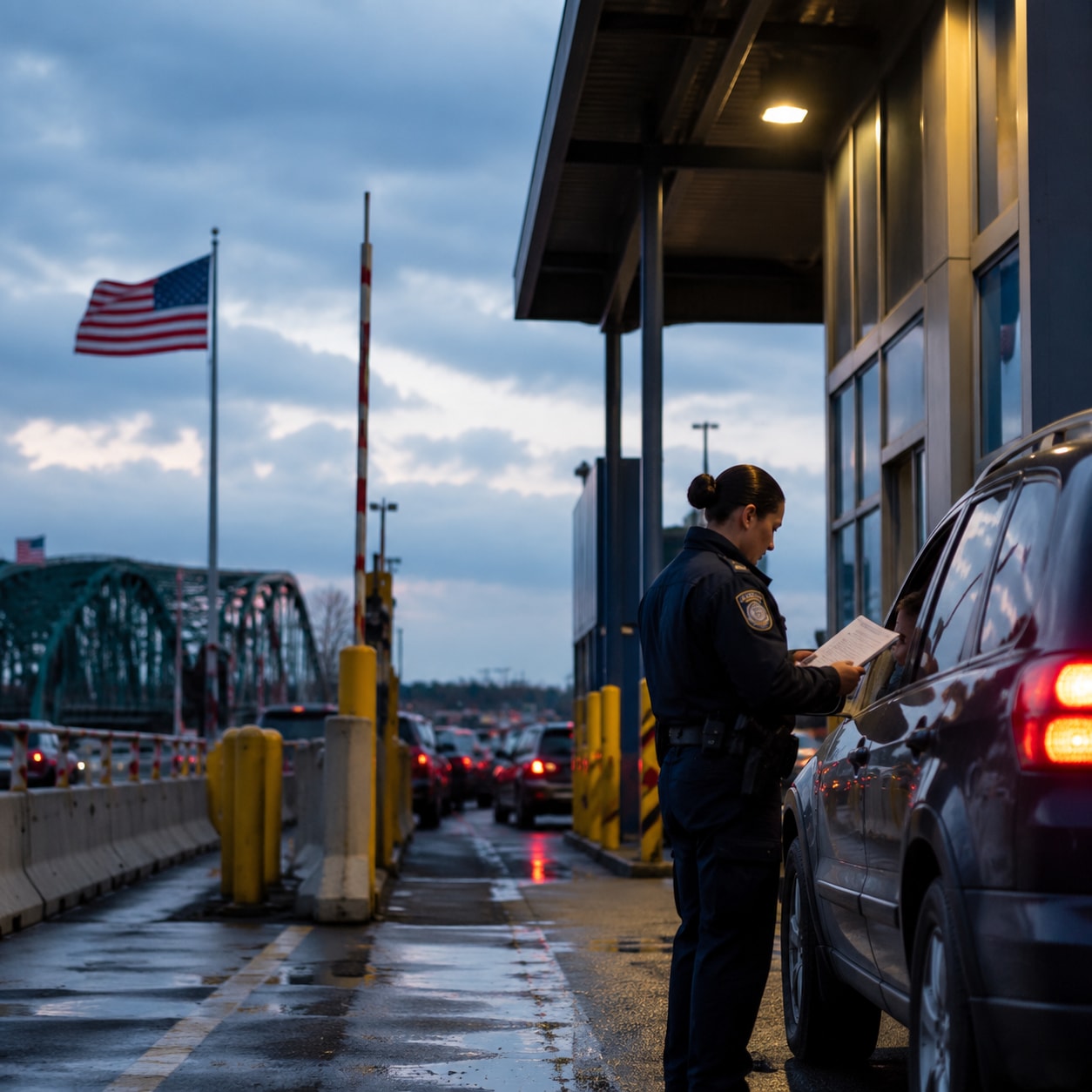
A careful reading guide to reported links among border deterrence, past asylum measures, dangerous migration routes, organized crime, and destination-specific document rules for US travelers.
Why these border readings belong together—and where their scope differs
These readings illuminate two distinct dimensions of crossing an international border. A US Customs and Border Protection resource addresses routine travel preparation: US citizens traveling abroad must satisfy the document requirements of their destination country. A separate InSight Crime investigation, published June 28, 2023, examines migration routes, asylum measures, and exploitation by organized crime.
The distinction matters. Guidance for travelers checking documents does not describe the circumstances facing migrants or people seeking asylum. Likewise, an investigation into humanitarian and criminal risks is not a substitute for official travel instructions.
The available research also does not establish a search trend, sudden increase in public interest, or breaking-news development. Readers should treat this article as an editorial guide to the supplied materials, not as evidence of a new border event. Because the CBP page has no stated publication date and the investigation reflects conditions and policies discussed in 2023, neither source alone establishes what requirements, policies, or risks are current today.
How deterrence can redirect migration toward more dangerous terrain
InSight Crime describes “prevention through deterrence” as a strategy that redirects migrants toward more hazardous terrain. According to the investigation, the routes involved can pass through deserts, mountains, and valleys where water is scarce. It reports that some migrants traveling through these environments face the possibility of death or disappearance.
This account highlights how the location of a route can itself become a humanitarian risk. When movement shifts into remote and physically demanding areas, the danger is not limited to whether a person reaches a border. The terrain and lack of water become part of the journey’s potential consequences.
The claim should be read with careful attribution. It comes from one investigative media source in the supplied research package, not from several independent sources that corroborate one another. The investigation therefore offers an important account of the relationship between deterrence and dangerous routes, but the available material does not support extending its findings to every route, migrant, or present-day border circumstance.
What the investigation says about MPP and Title 42
The InSight Crime investigation describes two former measures that affected people seeking asylum. Under the Migrant Protection Protocols, or MPP, some people who made asylum claims were required to wait in Mexico for immigration-court hearings. The source says Title 42 allowed US officials to expel people hoping to seek asylum to Mexico or their countries of origin.
The investigation links such policy conditions to migrant safety by describing how waiting or repeated movement through dangerous areas could increase exposure to kidnapping, extortion, and other exploitation. This is the investigation’s account of the relationship between policy and risk, rather than a conclusion independently established by multiple sources in the research package.
The date and status notes are essential: the investigation was published on June 28, 2023, and reported that both MPP and Title 42 had ended. Readers should not describe either measure as currently operating on the basis of this source. Any decision that depends on present asylum procedures requires a fresh check of current official information.
Organized crime risks along controlled border routes
InSight Crime reports that some criminal groups charge migrants for passage through corridors under their control. According to the investigation, some of these charges are at least $100. It also says certain groups have established units dedicated to kidnapping migrants and demanding ransom.
These reported practices show why the risks discussed in the investigation extend beyond difficult terrain. A person traveling through a controlled corridor may face demands for payment as well as the possibility of kidnapping or extortion. The source connects this exploitation with circumstances in which migrants and people seeking asylum travel through remote areas or remain exposed while waiting.
These details should not be generalized into claims about all border routes or groups. They derive primarily from a single investigation and are not independently corroborated by other sources in the supplied package. They are best used to identify forms of harm that the investigation documented and questions that readers may pursue through additional, current reporting—not to make universal claims about everyone crossing the border.
For international travelers: verify documents by destination
Ordinary international travel requires a different kind of preparation from the migration and asylum circumstances described above. CBP advises US citizens planning to travel abroad that they must comply with the document requirements of the country they intend to visit. General knowledge about US border procedures is therefore not enough to determine what a particular destination requires.
Travelers should identify the destination first and verify its applicable document rules before acting. CBP also points travelers to the US Department of State as a way to locate information about foreign consular offices in the United States. Those offices are relevant sources for destination-specific requirements.
The supplied CBP page does not provide a publication date, so readers should avoid assuming that every detail on it reflects the latest requirements without further verification. The practical principle supported by the page is clear: document checks are destination-specific, and travelers remain responsible for meeting the destination country’s rules.
How to read and use these sources responsibly
Begin by identifying the kind of source in front of you. The CBP page provides official travel guidance about destination-country documents. The InSight Crime article is an investigation into migration routes, past asylum measures, and organized crime. Their roles are different, and neither should be used as a substitute for the other.
Next, preserve the time context. The investigation was published June 28, 2023, and says MPP and Title 42 had ended. The CBP page has no supplied publication date. Do not turn either source into an unsupported statement about current policy or present conditions.
Finally, keep the evidentiary limits visible. The supplied package does not demonstrate a current trend, and its claims about policy consequences and criminal activity rely mainly on one investigation. Attribute those findings rather than presenting them as universally established facts. Before traveling or relying on border-policy information, verify current requirements through relevant official sources. Read the cited materials with their dates, purposes, and limitations in mind.
Disclosures and limitations
– This article was prepared with AI assistance from the supplied research package and approved content plan. – Factual claims are attributed to a US Customs and Border Protection travel resource and an InSight Crime investigation published June 28, 2023. The CBP page had no publication date in the supplied materials. – Claims about policy consequences and organized crime rely primarily on one investigative source and were not independently corroborated by multiple sources in the supplied package. – This article contains no product recommendations or disclosed affiliate links. If commercial recommendations or affiliate links are added later, that relationship should be clearly disclosed.
Sources
– Know Before You Go — U.S. Customs and Border Protection – Does US Policy Exacerbate Migrant Kidnappings on the US-Mexico Border? — InSight Crime – Contact Us — sos.state.tx.us – Government of the Czech Republic — vlada.gov.cz – The humanitarian funding crisis in four charts — YouTube – Resources – NCOSE — NCOSE – Visa policy of the United States – Wikipedia — en.wikipedia.org – First minister told to ‘get on with’ mobile phone ban in schools — BBC News – Eurosur — Migration and Home Affairs – Questions and answers on the Pact on Migration and Asylum — Migration and Home Affairs