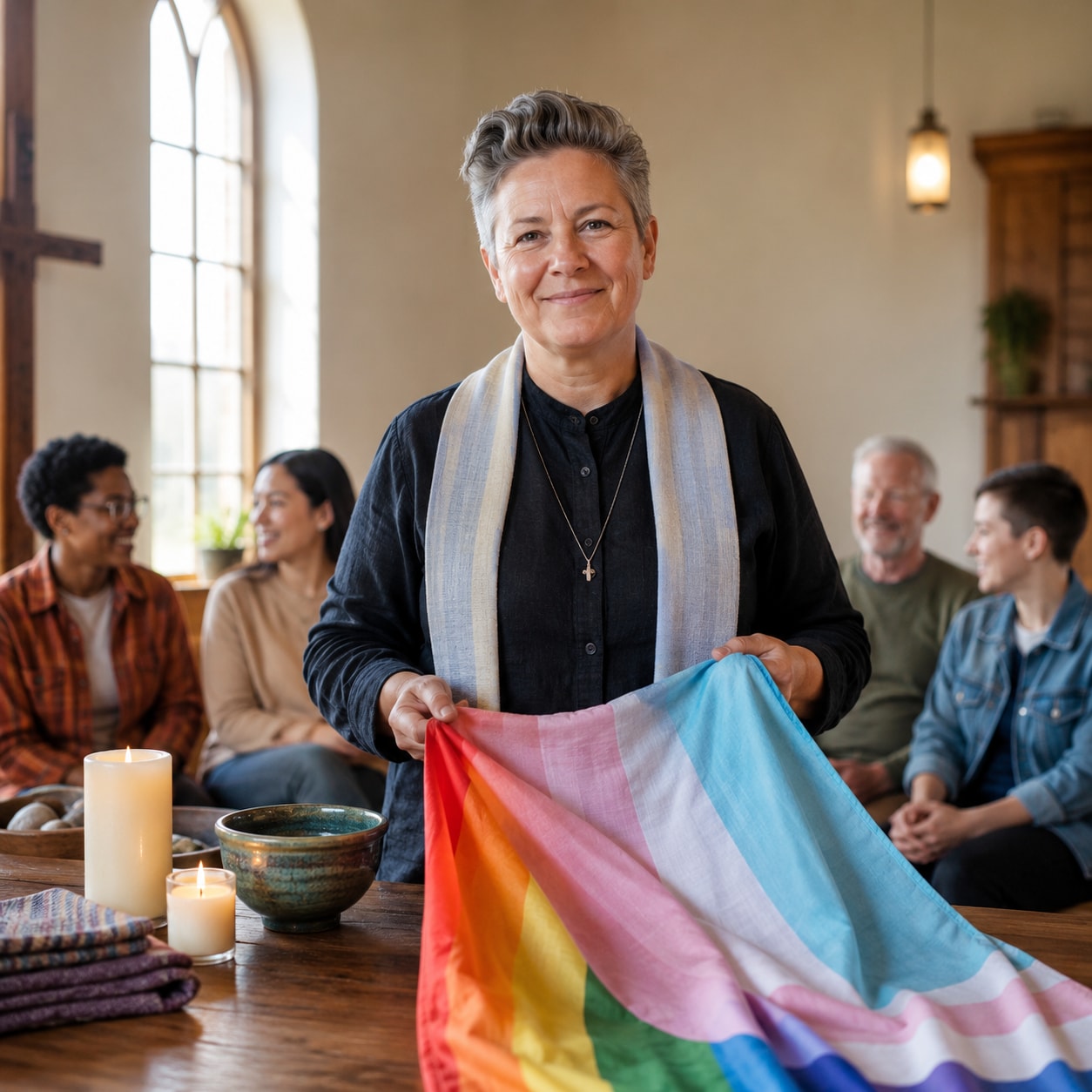
An evidence-grounded framework for planning inclusive public action that centers human dignity, trusted partnerships, safety, practical support, and sustained engagement with LGBTQ+ communities.
What a Faith Community Rally Against Homophobia and Transphobia Is—and Is Not
A faith community rally against homophobia and transphobia is a form of public action through which religious communities, LGBTQ+ partners, and other participants can affirm human dignity, nondiscrimination, safety, and inclusion. It can create space for progressive faith voices to oppose violence, criminalization, and exclusion directed at LGBTQ+ people.
This framework does not describe a specific announced rally in the United States. The available sources do not establish an organizer, date, location, attendance estimate, or program for such an event. Communities using this framework must verify and publish their own local details.
The action should also be more than a religious institution speaking about LGBTQ+ people. LGBTQ+ partners should help define the gathering’s purpose, language, priorities, and forms of support. This is particularly important because LGBTQ+ people of faith may experience pressure or rejection in religious settings while also feeling unwelcome in some LGBTQ+ spaces.
A gathering can include prayer, reflection, public statements, awareness activities, or connections to support resources. Whatever form it takes, its claims should remain specific and evidence-grounded. Its central purpose is not to imply that one event can end discrimination, but to make opposition to exclusion visible and connect that public witness with practical local action.
Why Visible Faith-Community Support Matters
LGBTQ+ people of faith may face stigmatization, pressure, disowning, or rejection within families and religious communities. At the same time, some may feel unwelcome in LGBTQ+ spaces because of their religious identity. These overlapping experiences can leave people without an obvious community in which every part of their identity is respected.
Visible support from inclusive faith communities can challenge the idea that exclusionary religious voices represent all religious people. The IDAHOTB faith resource identifies speaking out against attacks committed in the name of religion or morality as one way faith leaders can act. A public gathering can put that principle into practice by making affirming religious perspectives easier to hear.
Visibility alone, however, is not the same as support. Organizers should listen to LGBTQ+ partners before selecting messages or activities. The gathering should address needs identified by the people most affected rather than treating their presence as symbolic. Faith leaders can use their public role to oppose harm, but they should not displace LGBTQ+ leadership or present religious institutions as the sole source of solutions.
A carefully planned action can therefore serve several connected purposes: affirm LGBTQ+ people of faith, challenge religiously framed exclusion, provide a public point of connection, and direct participants toward continuing work. Its credibility depends on whether public language is matched by respectful partnerships and concrete commitments after the event.
Connecting Public Witness to Health, Safety, and Human Dignity
Homophobia and transphobia have consequences beyond hostile language. UNAIDS states that stigma, discrimination, violence, and criminalization can deter LGBTQ+ people from seeking HIV prevention, testing, treatment, and care because they may fear arrest or discriminatory treatment.
The scope of this problem is international. In a May 2024 statement, UNAIDS reported that more than 60 countries still criminalized LGBTQ+ people and another 20 criminalized gender expression and identity. It also reported that, globally in 2022, men who have sex with men were 23 times more likely to acquire HIV and transgender women were 20 times more likely to acquire HIV than other adults ages 15–49.
These figures should be attributed to UNAIDS, dated, and presented within their stated global context. They do not establish the conditions of every local community, and they should not be used to make unsupported claims about a particular rally or location. They do show why nondiscrimination and access to essential services can be part of a faith community’s public message.
Organizers can frame the gathering around a clear connection: every person should be able to seek care and participate in community life without stigma, violence, or exclusion. This keeps public witness grounded in human dignity while avoiding claims that a rally by itself will resolve structural barriers. The gathering can instead call attention to those barriers and connect attendees with verified, appropriate avenues of support.
Choosing an Occasion and a Clear, Evidence-Grounded Message
May 17, observed as the International Day Against Homophobia, Biphobia, and Transphobia, offers one established occasion for public action. The available faith resource describes an annual interfaith prayer initiative associated with the date. Communities may use that occasion for prayer, reflection, awareness activities, or another locally appropriate gathering.
May 17 is an option, not a requirement. The sources do not document a particular US event, so organizers must not present a proposed local gathering as already announced or verified. Any date, venue, sponsor, schedule, or accessibility detail should come from confirmed local planning.
A strong message can remain focused on a few supported principles: LGBTQ+ people possess human dignity; discrimination and violence cause harm; criminalization and fear can obstruct access to health services; and attacks justified in the name of religion or morality should be challenged by inclusive faith voices.
Planners should distinguish documented evidence from local commitments. For example, an attributed UNAIDS finding is an evidence-based statement. A promise that a congregation will provide meeting space or communications support is a local plan that must be confirmed by that congregation. Keeping those categories separate makes the event’s public materials clearer and more trustworthy.
Build the Action With Trusted Local Partners
Practical action begins with relationships. Organizers should bring LGBTQ+ community partners and faith-community participants together to define the gathering’s goals, messages, responsibilities, and follow-through. Trusted partners can help identify whether a rally, prayer gathering, awareness activity, or another format is most appropriate locally.
The City of Montpellier provides one illustrative example of institutional support. The city reports that it participates each year in the May 17 observance and supports LGBTQI+ associations through funding, facilities, equipment, and communications assistance. This is a municipal example from Montpellier, not a template that can automatically be transferred to a US community. It nevertheless demonstrates that support can take several practical forms beyond issuing a statement.
Local institutions can discuss which of those forms fit their actual capacity. A faith community might consider whether it can offer an accessible meeting resource, equipment, communications help, or a continuing relationship with a local organization. Any commitment should be agreed upon with the relevant partner before it is advertised.
Partnership also requires clarity about roles. Organizers should identify who is authorized to speak for each participating group and who will confirm public information. This helps prevent a congregation, municipality, or community organization from being named as a supporter without verification. The objective is a locally accountable action shaped with LGBTQ+ partners, not a generic program imposed on them.
Plan for Safety, Listening, and Crisis Support
Safety planning should be part of the gathering from the beginning. The 988 Lifeline recommends building a support network, talking to someone, and making a safety plan for LGBTQI+ young people and young adults who may need help. These principles can inform how organizers prepare to listen and direct people toward support without presenting rally volunteers as crisis professionals.
According to the supplied 988 Lifeline information, LGBTQI+ youth and young adults can receive support by call, text, or chat 24 hours a day, seven days a week. Service terms can change, so organizers should verify the current contact methods, availability, and relevant guidance directly before publishing or distributing them.
A rally’s support plan should clearly identify who can listen, what volunteers are equipped to do, and where people can seek crisis assistance. Resource information should be easy to locate and should not depend on someone publicly disclosing their identity or circumstances. Organizers should avoid promising forms of help that participating institutions cannot provide.
Listening is also an element of allyship. Participants can be prepared to hear concerns without debating or minimizing them, while organizers establish a process for responding to safety needs. A public gathering cannot replace professional crisis support, but it can make verified pathways to that support more visible and reinforce the importance of supportive networks and safety planning.
Turn a One-Day Gathering Into Sustained Community Support
A one-day gathering can draw attention to injustice, but continuing support requires commitments that last after the crowd disperses. The Montpellier example points to several practical possibilities: facilities, equipment, communications assistance, funding, and ongoing support for LGBTQI+ associations. Communities should select only the forms of support they can genuinely sustain and confirm them with local partners.
Faith communities can also continue making inclusive religious voices visible. The IDAHOTB faith resource emphasizes speaking out against attacks committed in the name of religion or morality. That work need not be limited to May 17. Ongoing awareness activities and relationships can help ensure that public opposition to exclusion is not expressed only on an annual occasion.
Follow-through should be concrete. Participating groups can document what they agreed to provide, identify who is responsible, and maintain contact with LGBTQ+ partner organizations. If a commitment involves space, equipment, communications help, or another resource, the parties should clarify its availability rather than leaving it as a symbolic promise.
Sustained support remains accountable when LGBTQ+ partners help evaluate what is useful. The aim is not simply to repeat the rally, but to carry its principles—dignity, inclusion, listening, and opposition to religiously framed harm—into continuing community relationships.
A Pre-Publication and Planning Checklist
Before announcing or holding an action, organizers should confirm the following:
– LGBTQ+ community partners have helped define the purpose, language, format, and follow-through. – The date, location, organizer, participating institutions, schedule, and accessibility information have been locally verified. – Public materials do not imply that an unverified US rally has already been announced. – May 17 and the interfaith prayer initiative are described as an established organizing occasion, not as proof of a particular local event. – UNAIDS statistics are attributed, dated, and presented as global findings rather than unsupported local claims. – Commitments involving facilities, equipment, funding, communications assistance, or other resources have been confirmed by the organizations responsible for them. – Current crisis-support contact methods and service terms have been rechecked before publication or use. – Volunteers understand the limits of their roles and know how to direct people toward verified support. – Public statements are paired with a specific plan for continued relationships or practical assistance after the gathering. – Documented source facts are clearly distinguished from proposed local plans.
This checklist cannot substitute for local consultation. It is a safeguard against turning a well-intentioned message into an inaccurate announcement or an unsupported promise.
Disclosures and limitations
– This article was prepared with AI assistance from the supplied research package and approved content plan. Material claims are attributed to the included IDAHOTB faith resource, UNAIDS, the City of Montpellier, and the 988 Lifeline through the accompanying source IDs. – The article is a general educational and planning framework, not confirmation of a specific event. Local organizers must verify event details, institutional commitments, accessibility information, and crisis-support terms before publication or use. – No products are recommended, and the supplied materials disclose no affiliate relationship.
Sources
– #rainbowflight #mexico #idahobit #lgbtq #worldpride2026 | Maarten Snijders | 10 comments — LinkedIn – Montpellier – Rainbow Cities Network — Rainbow Cities Network – Homophobia in ethnic minority communities – Wikipedia — en.wikipedia.org – UNAIDS calls for the protection of human rights on the International Day to End Homophobia, Biphobia, and Transphobia (IDAHOBIT) | UNAIDS — unaids.org – Global Participant Directory – World Movement for Democracy — World Movement for Democracy – International Day Against Homophobia, Biphobia & Transphobia | The bunqr | Ep. 2 – YouTube — youtube.com – Religion — IDAHOTB – LGBTQ advocates say Trump’s new executive order removes protections against job discrimination — NBC News – International Day Against Homophobia, Transphobia and Biphobia — mzv.gov.cz – LGBTQI+ — 988 Lifeline