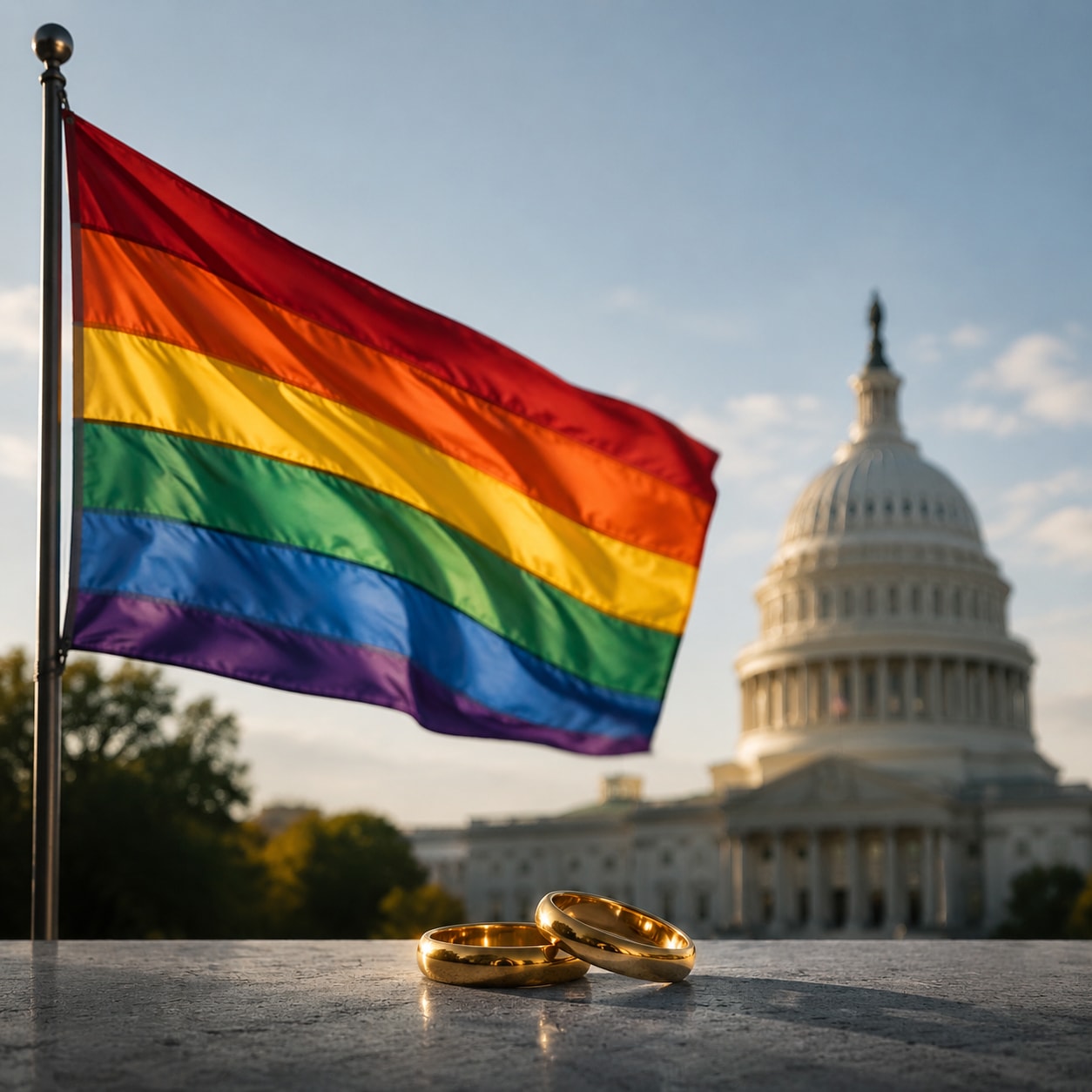
A source-conscious introduction to the constitutional and LGBTQ human-rights context of marriage equality, the crucial distinction between Washington state and Washington, DC, and the limits of the available research.
What “the Nation’s Capital” Means in This Guide
In this guide, “the nation’s capital” means Washington, DC—the District of Columbia—not Washington state. That distinction is essential whenever readers evaluate marriage information, legal requirements, or administrative guidance.
One source in the available research discusses wedding law in Washington state and cites RCW 26.04.050 and RCW 26.04.070. Those citations identify it as state-specific material. The source does not establish the law of the District of Columbia, so its requirements must not be transferred to Washington, DC.
This guide therefore uses that material only as a jurisdictional warning. It does not treat the cited Washington statutes as evidence about marriage equality or marriage procedures in the nation’s capital. Anyone seeking practical guidance should first confirm that a resource expressly applies to the District of Columbia.
The Broader US Constitutional and Civil-Rights Context
Marriage equality can be considered within the broader study of constitutional rights and civil rights in the United States. The available overview says that legally protected rights may arise from several sources, including the federal Constitution and its amendments, state constitutions, legislation enacted by Congress and state legislatures, and judicial precedent. This framework helps explain why a rights question may involve several legal authorities rather than a single document.
The National Constitution Center’s classroom resource collection provides background materials on constitutional amendments, the First Amendment, voting rights, slavery and Reconstruction, and Supreme Court cases. These subjects can help educators, congregational leaders, organizers, and community members develop a broader understanding of constitutional change and rights in the United States.
These resources are contextual, however. The supplied material from the National Constitution Center does not directly address marriage equality in the District of Columbia. Likewise, a general description of the sources of protected rights does not establish a particular DC rule. Constitutional education can support informed discussion, but it should not be presented as verified evidence of current local marriage law.
Why Marriage Equality Belongs in the LGBTQ Human-Rights Conversation
The supplied human-rights overview identifies discrimination and violence against LGBTQ people, along with anti-LGBTQ legislation, as continuing human-rights issues in the United States. That broad context supports discussing marriage equality as part of a larger conversation about LGBTQ rights, legal protection, dignity, and equal treatment.
The source is a secondary overview, so its role here is limited. It does not document particular conditions in the District of Columbia, establish DC marriage law, or describe the capital’s legal history. It also should not be used to infer a specific local policy or administrative practice.
For community discussion, the responsible distinction is between context and proof. The overview can help explain why LGBTQ rights remain relevant to human-rights education across the United States. DC-specific conclusions, however, require current sources that directly address the District. Keeping those categories separate avoids turning a general national concern into an unsupported local claim.
Washington State Rules Are Not Washington, DC Rules
A page about wedding law may use “Washington” while referring to Washington state rather than Washington, DC. The available wedding-law source demonstrates this risk: it discusses state law and cites provisions of the Revised Code of Washington, specifically RCW 26.04.050 and RCW 26.04.070.
Those citations do not establish any requirement in the District of Columbia. They cannot verify who may marry in DC, who may officiate, what documents are required, how a license is obtained, or which office administers the process there. They also do not establish the history or current status of marriage equality in the capital.
Before relying on practical guidance, look for an explicit jurisdictional label. References to “Washington state,” “RCW,” or the Revised Code of Washington indicate state material. A resource meant to answer a question about the nation’s capital should expressly identify the District of Columbia or Washington, DC. When the jurisdiction is unclear, do not use the material to make a legal or administrative decision.
What the Available Research Does Not Establish
The available sources do not provide direct evidence of the current marriage-equality law of the District of Columbia. They also do not document DC-specific historical milestones, key court decisions, licensing procedures, administrative requirements, or local opportunities for advocacy and collective action.
The National Constitution Center material supports general constitutional education but does not directly address DC marriage equality in the supplied information. The human-rights overview supplies broad national context concerning LGBTQ discrimination, violence, and legislation, but it is a secondary summary and does not verify DC conditions. The wedding-law page concerns Washington state rather than the District of Columbia.
Publication dates are also missing for multiple sources. An observation or retrieval time would not, by itself, show when a claim was last reviewed or whether a legal rule remains current.
These limitations matter because background knowledge is not a substitute for jurisdiction-specific authority. The research supports a careful explanation of context and source evaluation, but it does not support a definitive account of DC law, history, procedures, or present-day action resources.
How to Evaluate Further Resources Responsibly
Begin by checking jurisdiction. A source about Washington state is not authority for the District of Columbia, even if both are described informally as “Washington.” Look for an explicit reference to Washington, DC, or the District of Columbia before treating guidance as locally relevant.
Next, identify what the source can establish. Constitutional teaching materials may provide useful background on amendments, rights, Reconstruction, voting, or Supreme Court cases without answering a local marriage-law question. A national human-rights overview may frame concerns affecting LGBTQ people without proving a specific DC fact.
Check the date and scope of every practical resource. When a publication or update date is unavailable, its currency cannot be assessed from the supplied material alone. Distinguish explanatory context from statutes, procedures, or other jurisdiction-specific authority.
Finally, consult current official DC materials before making legal or administrative decisions. Verify that any instructions apply specifically to the District of Columbia and address the precise question at hand. This approach preserves the value of broader educational resources while preventing them from being mistaken for current local guidance.
Disclosures and limitations
– This article was prepared with AI assistance from the supplied research package and approved content plan. – Material claims are limited to the three identified sources. The available research does not directly establish current District of Columbia marriage law, history, procedures, or local action resources. – The LGBTQ human-rights material is a secondary overview, and multiple supplied sources lack publication dates; readers should consult current official District of Columbia materials before acting. – This article contains no product recommendations or disclosed affiliate links.
Sources
– Constitution Classroom Resource Library | Constitution Center — National Constitution Center – constitutioncenter.org – Washington Wedding Laws — ulc.org – Global Participant Directory – World Movement for Democracy — World Movement for Democracy – Human rights in the United States – Wikipedia — en.wikipedia.org – Ending gender-based violence — European Commission – – YouTube — youtube.com – Simpsonovi – hudba ze seriálu — SerialZone.cz – Checking your browser – reCAPTCHA — pmc.ncbi.nlm.nih.gov – Marriage between Czech Nationals and Foreign Nationals in the Czech Republic – Ministry of the interior of the Czech Republic — mv.gov.cz – Marriages and divorces | Statistikaamet — stat.ee