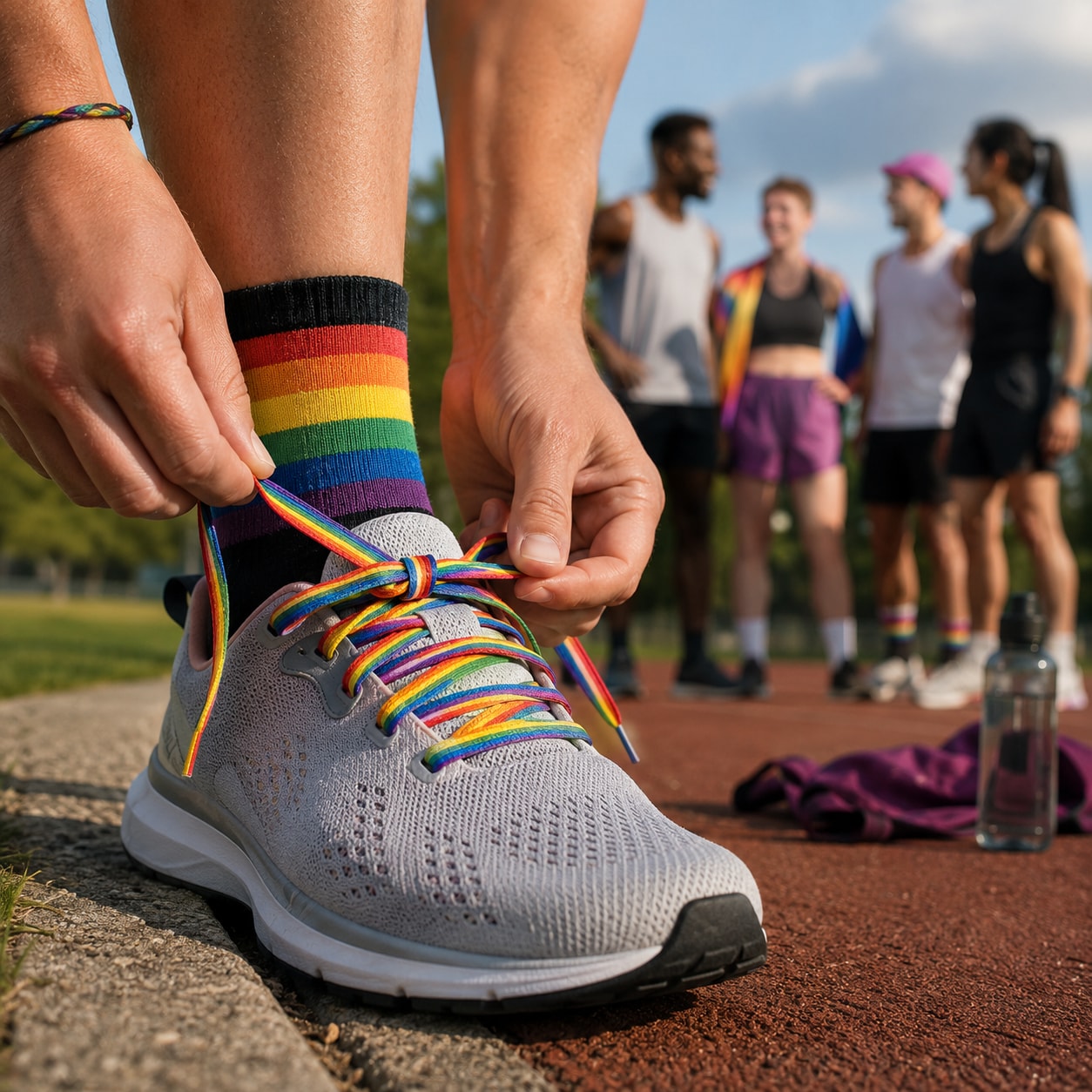
Running, walking, and rolling can create paths to LGBTQ+ connection, visibility, remembrance, celebration, and charitable support—without making competition the only measure of participation.
What “Running with Pride” Can Mean
“Running with Pride” can describe more than entering a race. It can bring movement together with LGBTQ+ community connection, remembrance, visibility, celebration, and support for charitable causes.
The Pride & Remembrance Run presents one model: an event open to people of different ages and athletic abilities, including members of 2SLGBTQ+ communities and allies, with running, walking, rolling, and fundraising all part of the experience. Its use of “remembrance” also places movement within a broader community context rather than treating it only as a test of speed.
A reported 2026 LGBTQ+ Pride Run in New York offers another example of movement as a large public gathering. Runner’s World reported that the 45th Front Runners New York LGBTQ+ Pride Run took place in Central Park on June 27, 2026, with 8,146 runners according to figures attributed to New York Road Runners.
Together, these examples show how a Pride run can make room for several purposes at once: moving in a personally appropriate way, gathering with others, increasing public visibility, honoring community memory, and supporting a cause.
Participation Beyond Competition
Inclusive movement does not have to begin with racing experience or a particular pace. The cited organizations describe formats intended to accommodate different ways of participating.
The Pride & Remembrance Run includes running, walking, and rolling. Its listed 2026 program offered a 5K, 3K, children’s race, and virtual run, giving participants alternatives to a single conventional race format. These choices may help people select a distance or setting that better matches their mobility, experience, or comfort. They should not, however, be treated as a guarantee that every individual accessibility need will be met.
DC Front Runners similarly describes regular noncompetitive running and walking activities. The organization says membership is not restricted by pace, age, athletic ability, race, gender, or sexual orientation. This shifts the emphasis from qualifying for a group to finding a workable way to join it.
For someone worried about being too slow, too inexperienced, or unable to run an entire course, the available evidence points to practical alternatives: walking, rolling, choosing a shorter distance, attending a noncompetitive club activity, or participating virtually where that option is offered. Current formats and accessibility details should always be confirmed with the organizer.
How LGBTQ+ Running Communities Create Connection
Recurring LGBTQ+ running groups can create connection through repetition: people have opportunities to move together regularly rather than meeting only at one annual Pride event.
DC Front Runners describes itself as a running, walking, and social club serving LGBTQ+ people and friends in Washington, DC, and the surrounding metropolitan area. The club says it has operated for more than 40 years and offers regular noncompetitive runs and walks. These are organizational statements rather than independently verified claims in the supplied research.
The combination of movement and social activity matters. A person can approach the group through a shared activity while also having an avenue for community interaction. Because the club explicitly includes walking and says membership is not limited by pace or athletic ability, its stated model does not make competitive performance the condition for belonging.
First-time participation can still involve uncertainty: where to meet, what pace to expect, or how a visit works. DC Front Runners addresses that need by providing first-visit information and a frequently asked questions entry point. Reviewing such guidance before attending can make expectations clearer while allowing participants to check whether the group’s current arrangements fit their needs.
Pride Events as Spaces for Visibility, Memory, and Celebration
Pride movement events can function as public community gatherings as well as athletic activities. The Pride & Remembrance Run explicitly links participation with remembrance and fundraising, while welcoming 2SLGBTQ+ people and allies across different ages and athletic abilities. Its run-walk-roll framing broadens the visible forms that participation can take.
The event page listed June 27 as its 2026 date and included a 5K, 3K, children’s race, and virtual run. The supplied material does not identify the event’s location, so it should not be characterized as a US event. Its organizers also say the event has raised more than CAD 3.7 million since 1996 and that proceeds go to selected 2SLGBTQ+ charitable beneficiaries. The research package does not include an independent audit of that total or a specific beneficiary list.
In the United States, Runner’s World reported that the 45th Front Runners New York LGBTQ+ Pride Run was held in Central Park on June 27, 2026. The publication cited New York Road Runners data indicating 8,146 participants. Because the supplied research does not include the underlying NYRR page, that figure is secondhand.
These examples illustrate how organized movement can hold visibility, memory, and celebration together. The meaning comes not only from finishing a distance but also from gathering publicly around LGBTQ+ community identity.
Turning Personal Movement into Charitable Support
Movement can support charitable work through an organized event or a self-directed challenge.
DC Front Runners connects its community activities with an annual Pride Run 5K that raises money for local LGBTQ+ and running-related charities. The supplied information does not identify current beneficiaries or fundraising terms, so prospective participants or donors should verify those details directly.
Point of Pride offers a different event-based pathway. Its site says its charity team covers races in New York, Los Angeles, and Philadelphia and provides team participants with race entry, fundraising support, and race-day gear. These benefits and available places may change and should not be assumed to apply to every event or registration period.
A named race is not the only option described by Point of Pride. The organization also allows supporters to create fundraising efforts around a personally chosen challenge, including a 5K, half marathon, cycling, hiking, or another activity. This model lets a participant begin with a form of movement that fits their goals instead of waiting for access to a particular race.
Before committing, confirm the fundraising minimum or target, deadlines, participant support, use of proceeds, and whether entry is included. No specific fundraising result is guaranteed by joining a team or completing a challenge.
Choosing a Participation Path That Fits
A suitable path depends on how someone wants to move, connect, and contribute.
For recurring community contact, a club may be the strongest starting point. DC Front Runners describes ongoing noncompetitive runs and walks alongside social activity, with first-visit guidance available for newcomers.
For a shared public occasion, an organized Pride event may be a better fit. The Pride & Remembrance Run’s 2026 program demonstrates the range an event can offer: 5K and 3K distances, a children’s race, and a virtual option, with running, walking, and rolling included in its broader participation model.
For cause-centered participation, a charity team can combine an established race with fundraising support. Point of Pride says its team operates across selected events in New York, Los Angeles, and Philadelphia. People who do not want to rely on a specific race can instead consider its self-directed model, using a run, ride, hike, or another chosen challenge to fundraise.
A simple decision framework is to consider mobility and preferred activity, comfortable pace and distance, desired level of social interaction, interest in an in-person or virtual format, and willingness to fundraise. These considerations do not establish what an organizer can accommodate. After selecting a path, confirm current accessibility, schedules, registration availability, and fundraising requirements directly with the relevant organization.
What First-Time Participants Should Confirm
Before attending, registering, or fundraising, check the details that determine whether an opportunity actually fits.
Start with newcomer guidance. DC Front Runners provides first-visit information and an FAQ entry point, which can help clarify how its activities work. Ask about meeting arrangements, route or distance options, pace expectations, walking participation, and any mobility-related needs that matter to you.
For an organized event, verify the year and date, location, registration status, available distances, virtual participation, and whether running, walking, or rolling is supported in practice. The Pride & Remembrance Run information supplied here concerns its June 27, 2026 program; it should not be assumed to describe a future edition.
For fundraising, confirm the beneficiary, how proceeds are allocated, any minimum commitment, deadlines, and what assistance participants receive. Point of Pride describes race entries, fundraising support, and race-day gear for its charity team, but current availability and event-specific terms require confirmation.
Treat published totals and histories with appropriate care. The Pride & Remembrance Run’s cumulative fundraising figure and DC Front Runners’ organizational history come from their own pages. Also ask whether registration fees or donations are refundable and request current accessibility information when those details affect your decision.
Examples to Explore, With Important Source Limits
The cited examples provide starting points, not a complete directory of LGBTQ+ movement opportunities.
Pride & Remembrance Run illustrates an inclusive run-walk-roll event connected to remembrance and charitable fundraising. Its page listed a June 27, 2026 event with 5K, 3K, children’s, and virtual options. The organizer’s claim of more than CAD 3.7 million raised since 1996 was not independently verified in the supplied material, and the research does not identify the event’s location or specific beneficiaries.
DC Front Runners illustrates a recurring club model combining noncompetitive running, walking, and social activity in the Washington, DC, region. Its history, membership policies, and program descriptions are attributed to the club itself.
The reported 2026 Front Runners New York LGBTQ+ Pride Run shows the scale a Pride race can reach. Its 8,146-participant figure comes from Runner’s World’s account of New York Road Runners data rather than an included original NYRR source.
Point of Pride illustrates both charity-team participation and self-directed challenges. Its listed locations, entries, fundraising support, and gear are organizational claims and may change.
The research was observed no later than July 30, 2026. Confirm current dates, places, availability, beneficiary information, accessibility, and fundraising terms on the relevant organization’s page before acting.
Disclosures and limitations
– This article was prepared with AI assistance from the supplied Research Package and approved Content Plan. – Material claims are attributed to the supplied organizational pages or reporting. Some histories, fundraising totals, program benefits, and inclusion statements are self-reported, while the New York participation figure is secondhand; the supplied research does not independently verify them. – Event dates, registration, accessibility, participant benefits, beneficiaries, and fundraising terms may change. The supplied research was observed no later than July 30, 2026, so readers should confirm current details directly with the relevant organization. – This article contains no commercial product recommendations or disclosed affiliate links.
Sources
– Wikipedia:WikiProject LGBTQ+ studies/Recognized content – Wikipedia — en.wikipedia.org – VA National Veterans Sports Programs — National Veterans Sports Programs – pride & remembrance run — pride & remembrance run – About us – PRIDE Network — PRIDE Network – Professionals in Doctoral Education – ‘Keep Running with Me?’ This Couple Got Engaged at the Race That Started It All — Runner’s World – – DC Front Runners — DC Front Runners – From Visibility to Action: Advancing Inclusion in Aviation this Pride Month — Mobility and Transport – Marathons & Challenge Events | Run with Point of Pride! — pointofpride.org – Timeline | Boston University — bu.edu – DOMŮ – RADIO DIXIE — radiodixie.cz