
Congregations can move beyond ceremonial recognition by researching their local context, respecting tribal sovereignty, following Indigenous leadership, committing resources, and establishing a funded action plan with clear responsibilities and regular review.
Start With Research and Institutional Self-Assessment
Begin by examining the congregation’s current relationship with the land and with the Indigenous people who continue to steward it. Research the Indigenous nations connected to the area, the congregation’s institutional history, and the resources it can responsibly offer. Review budgets, buildings, land, staff capacity, meeting practices, and community relationships.
Do this foundational work before requesting help from Indigenous people. Asking community members to research local history or refine acknowledgment language without compensation can impose unpaid emotional labor. The goal is not simply better wording, but an honest assessment that identifies concrete opportunities for future support. Record what the congregation learns, what it still needs to understand, and who is responsible for the next steps.
Build Relationships Around Sovereignty and Indigenous Leadership
Approach Indigenous communities and nations as partners, not beneficiaries of a congregation’s charity. Recognizing tribal sovereignty means respecting Indigenous authority, priorities, and self-determination rather than arriving with a finished project or predetermined solution.
When a community is open to engagement, listen for priorities defined by its leadership and develop shared goals collaboratively. Establish clear communication about expectations, capacity, decision-making, timelines, and resources. If the congregation requests advice, teaching, writing, or other expertise, include compensation in the plan rather than assuming that labor will be donated.
Durable relationships depend on mutual respect and meaningful allyship. Congregations should be prepared to change their own practices, shift resources, and follow Indigenous-led direction—not merely invite participation in an existing congregational agenda.
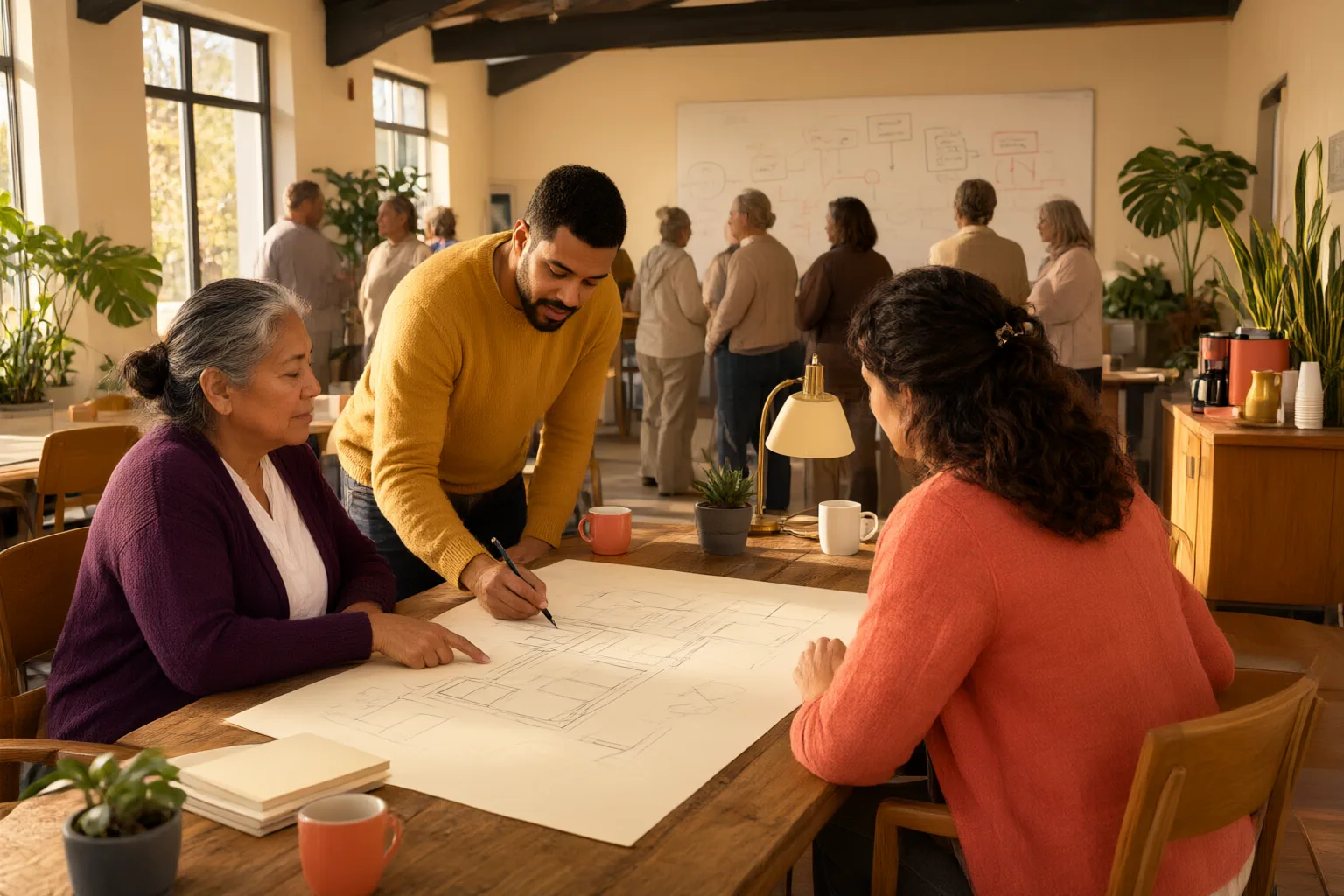
Turn Commitments Into Resources and Accountability
Convert reflection into a written, revisable action plan. Possible commitments supported by the sources include recurring donations to Indigenous organizations, participation in Indigenous-led actions, support for voluntary land-tax initiatives where applicable, returning land, and making organizational resources or access available to Indigenous people. A congregation should select commitments through research and relationship-building, not treat this list as a universal prescription.
Assign each commitment a budget, responsible person or team, timeline, and review date. Develop goals collaboratively where a partnership exists, then report progress transparently. Regular review allows the plan to change as relationships and circumstances develop.
Accountability also needs a place in congregational life. Recurring Reconciliation Discussions or Decolonization Minutes can reserve meeting time for Indigenous issues, settler responsibility, institutional change, and possible action. Use that time to examine completed work, unresolved responsibilities, resource decisions, and the next concrete step.
Conclusion
Moving beyond land acknowledgments is an ongoing practice of research, relationship-building, resource commitment, and accountability. The measure is not the polish of a statement, but whether the congregation respects sovereignty, follows Indigenous leadership, supports shared goals, and reviews its conduct openly. Schedule a congregational self-assessment now, research the nations connected to the land and community, and assign responsibility for drafting a funded action plan with clear safeguards and recurring review dates.
Disclosures and limitations
- This article was prepared with AI assistance using only the supplied research package. Its factual guidance is synthesized from the source IDs attached to each section and FAQ.
Related reading
- Justice Topic Index
- How Faith Communities Can Build Safer, Consistent Prison Letter-Writing Programs
Sources
- Evolving Beyond Land Acknowledgments: Embracing Reconciliation Discussions — Northwest American Indian Coalition, Inc. — Northwest American Indian Coalition, Inc.
- Beyond Land Acknowledgment: A Guide – Native Governance Center — Native Governance Center
- Steps Toward Reconciliation – The REACH Association — The REACH Association
- Going Beyond Land Acknowledgments — Arts Midwest
- Going Beyond Land Acknowledgements | Redbud — Redbud
- Beyond Land Acknowledgments — Cerritos College