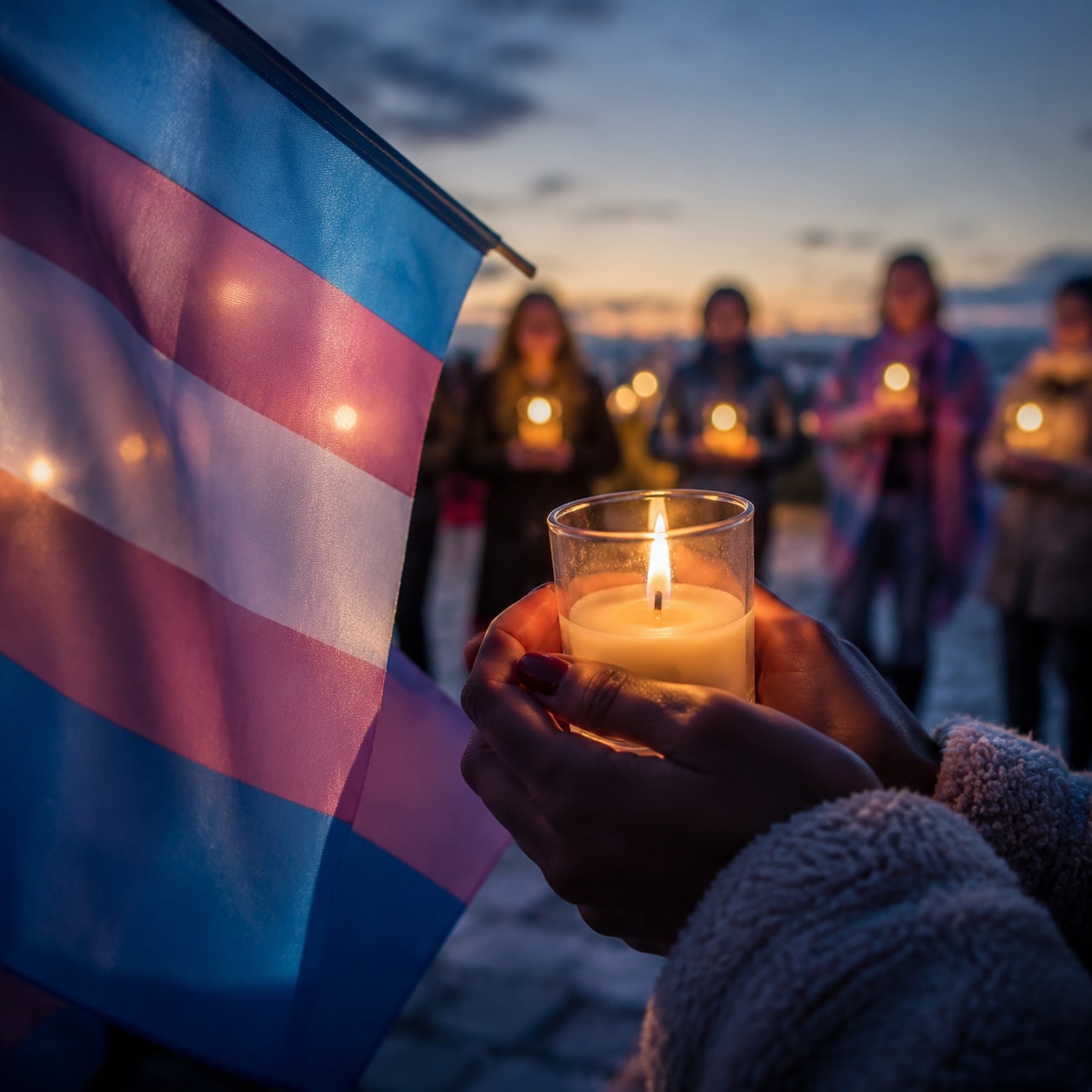
Observed each November 20, Transgender Day of Remembrance honors people lost to anti-transgender violence and invites communities to turn mourning into sustained, practical solidarity with transgender people.
What Transgender Day of Remembrance Commemorates
Transgender Day of Remembrance, often shortened to TDOR, is observed annually on November 20. It honors people whose lives were taken through anti-transgender violence and draws attention to the violence that continues to affect transgender communities.
Remembrance is therefore both personal and public. It makes space to grieve particular people rather than reducing their deaths to an abstract issue. At the same time, it asks communities to recognize the conditions in which violence, stigma, and exclusion occur. The day can be emotionally difficult, especially for transgender people and those who have lost friends, relatives, or community members.
A meaningful observance does more than acknowledge loss for a single day. It can connect reflection with care for transgender people who are living now. For congregations, classrooms, and community organizations, that means approaching November 20 as an invitation to listen, learn, oppose discrimination, and develop forms of support that continue after the ceremony ends.
How TDOR Began
TDOR began in 1999 and is closely connected to the remembrance of Rita Hester, a Black transgender woman killed in Massachusetts in 1998. Gwendolyn Ann Smith was among the people who created the observance in response. The first TDOR commemorations were held in Boston and San Francisco in November 1999.
This history matters because the observance emerged from a particular loss and a community response to it. Remembering Rita Hester situates TDOR within efforts to ensure that transgender people killed by violence are neither rendered invisible nor remembered without respect for who they were.
The observance has come to include several forms of public remembrance. Events commonly read the names of people who died and may also include candlelight vigils, religious services, marches, art exhibitions, food drives, or film screenings. These different practices offer communities more than one way to participate: through mourning, worship, education, creative expression, material support, or collective presence. Whatever form an event takes, its central purpose remains honoring lives lost to anti-transgender violence while directing attention toward the people and communities still affected by it.
Remembering People with Accuracy and Dignity
Reading the names of those who have died is a defining practice at many TDOR observances. Doing so with dignity requires attention to each person’s name and gender rather than allowing disrespectful reporting or inaccurate records to define how that person is remembered.
Available lists and death counts should not be treated as complete totals. Misgendering can obscure that a victim was transgender, while difficulties confirming a person’s identity and failures to report cases can leave deaths unrecognized. These limitations mean that a list may document known losses without capturing the full extent of the violence.
Communities using a published list should be transparent about that incompleteness. They can describe it as a record assembled from the information available rather than as a definitive count. This preserves the value of naming known individuals without implying that unrecorded people did not exist.
Accuracy is not merely an administrative concern. Incorrect gender references and missing identity information can prevent a person from being remembered as they lived. A careful observance should therefore center respectful representation, acknowledge gaps in the record, and resist turning individual lives into statistics alone. Each name represents a person whose dignity exceeds the circumstances of their death.
Holding Grief, Anger, Fear, and Care in Community
TDOR can bring grief, anger, fear, and stress to the surface. Communities should not assume that everyone will experience the observance in the same way. For some, attending a vigil or hearing names read aloud may offer connection; for others, the weight of the event may make a different form of participation more appropriate.
Congregations, schools, and community groups can choose among established observance forms, including candlelight vigils, religious services, marches, art exhibitions, food drives, and film screenings. A program might combine quiet reflection with a clear connection to community support. The goal is not to force a particular emotional response, but to make room for mourning while showing that participants do not have to carry it in isolation.
Care also means considering what follows the event. An observance can identify routes to peer support, mental-health services, mutual aid, volunteering, or transgender-led organizations. Connecting remembrance to support helps prevent the ceremony from ending at acknowledgment alone.
Organizers should treat the emotional impact of TDOR as part of the observance rather than as a distraction from it. Reflection and action can reinforce one another: grief can be witnessed in community, while anger or fear can be directed toward practical commitments against discrimination and violence.
Understanding Solidarity Through an Intersectional Lens
Anti-transgender violence and exclusion do not affect every person in the same way. The sources informing this article call particular attention to Black transgender women, other transgender women of color, immigrants, and refugees. Their experiences show why solidarity must account for overlapping conditions rather than treating gender as an isolated part of a person’s life.
Race, gender, and migration status can intersect in experiences of violence and social exclusion. An intersectional approach asks communities to notice those connections and to avoid presenting transgender people as a single, uniform group. It also keeps the history of TDOR in view: the observance is closely tied to the killing of Rita Hester, a Black transgender woman.
For organizers, this perspective changes the questions surrounding an event. Whose lives and leadership are being centered? Which communities face overlapping barriers? Are transgender people discussed only as victims, or are their knowledge and leadership recognized? These questions help distinguish solidarity from a generalized expression of sympathy.
An intersectional observance need not claim to explain every person’s experience. Its responsibility is to recognize that exposure to harm and access to support are shaped by more than one dimension of identity and circumstance. That recognition can guide communities toward transgender-led work and toward forms of support responsive to people facing compounded exclusion.
Turning Remembrance into Practical Support
Remembrance becomes solidarity when it shapes what a community does beyond November 20. The available sources identify several practical pathways: donating to relevant organizations, volunteering, creating or contributing to mutual-aid funds, participating in transgender-rights advocacy, opposing discrimination, and hiring and paying transgender people equitably.
Support can also be directed toward the everyday services transgender communities identify and provide. Examples described by the East Bay Community Foundation include mental-health care, peer support, safe spaces for young people, case management, food, and gender-affirming clothing. Transgender-led legal and advocacy work offers another route for addressing exclusion while respecting community leadership.
Individuals and groups can begin by choosing one commitment they can sustain. A congregation might support a transgender-led organization or connect a food drive to ongoing community assistance. Volunteers might contribute time to peer-support, youth, or mutual-aid work. Employers can examine whether their hiring and compensation practices treat transgender people fairly. Community members can oppose discrimination and take part in advocacy for transgender rights.
The most appropriate action will depend on local needs and a participant’s capacity, but the underlying principle is consistent: direct resources, time, and institutional support toward the lives of transgender people now. Symbolic statements can name a value; continuing action gives that value practical form.
A useful closing commitment for a TDOR event is therefore specific and durable. Choose one act—supporting a transgender-led organization, volunteering, contributing to mutual aid, advocating against discrimination, or helping create a safer community space—and establish how it will continue after the observance.
Honoring Transgender Life Beyond Trauma
TDOR necessarily confronts death and violence, but transgender people should not be represented only through trauma. The sources also call for recognition of transgender people’s creativity, accomplishments, resilience, joy, and full lives.
This broader view does not diminish remembrance. It places loss within a fuller understanding of what was taken and affirms that transgender life is more than a record of harm. Community programs can hold both truths together: people have been lost to anti-transgender violence, and transgender people continue to create, lead, care for one another, and experience joy.
Year-round solidarity follows from that fuller recognition. Supporting peer networks, youth spaces, mutual aid, equitable employment, advocacy, and transgender-led organizations is not only a response to tragedy. It is an investment in people’s ability to live with dignity and shape their own communities.
November 20 can mark a moment of collective attention, but it should not define the limits of that attention. Remember the people who died accurately and respectfully. Make room for grief. Then carry one concrete commitment forward in a way that supports transgender life beyond the day of remembrance.
Disclosures and limitations
– This article was drafted with AI assistance and is based exclusively on the supplied research package and its cited source identifiers; no independent interviews, product testing, personal experience, or additional research were used. – The underlying materials include advocacy organizations, service providers, personal or informational websites, blogs, and Wikipedia alongside other reporting. Claims have therefore been limited to the supplied evidence and attributed through source identifiers. – No products or commercial offers are recommended in this article, and no affiliate relationship or compensation information was supplied.
Sources
– Transgender Day of Remembrance – Wikipedia — en.wikipedia.org – Transgender Day of Remembrance 2025 | Monte Nido — montenido.com – Transgender Day of Remembrance: At least 22 trans people killed in 2019 — NBC News – Transgender Day of Remembrance 2024 – Trans Lifeline — translifeline.org – Honoring Transgender Day of Remembrance | East Bay Community Foundation — East Bay Community Foundation – Trans Day of Remembrance: A History | QueerEvents.ca — Queer Events – Trans Day of Remembrance Officially Recognized by King County in 2023 – Gender Justice League — Gender Justice League – Transgender Day of Remembrance: Honoring Lives, Fueling Change, and Holding Hope — Ryder Tombs – TDoR – Transgender Day of Remembrance – Transparent — Transparent – Transgender Day of Remembrance – Data Science by Design — datasciencebydesign.org