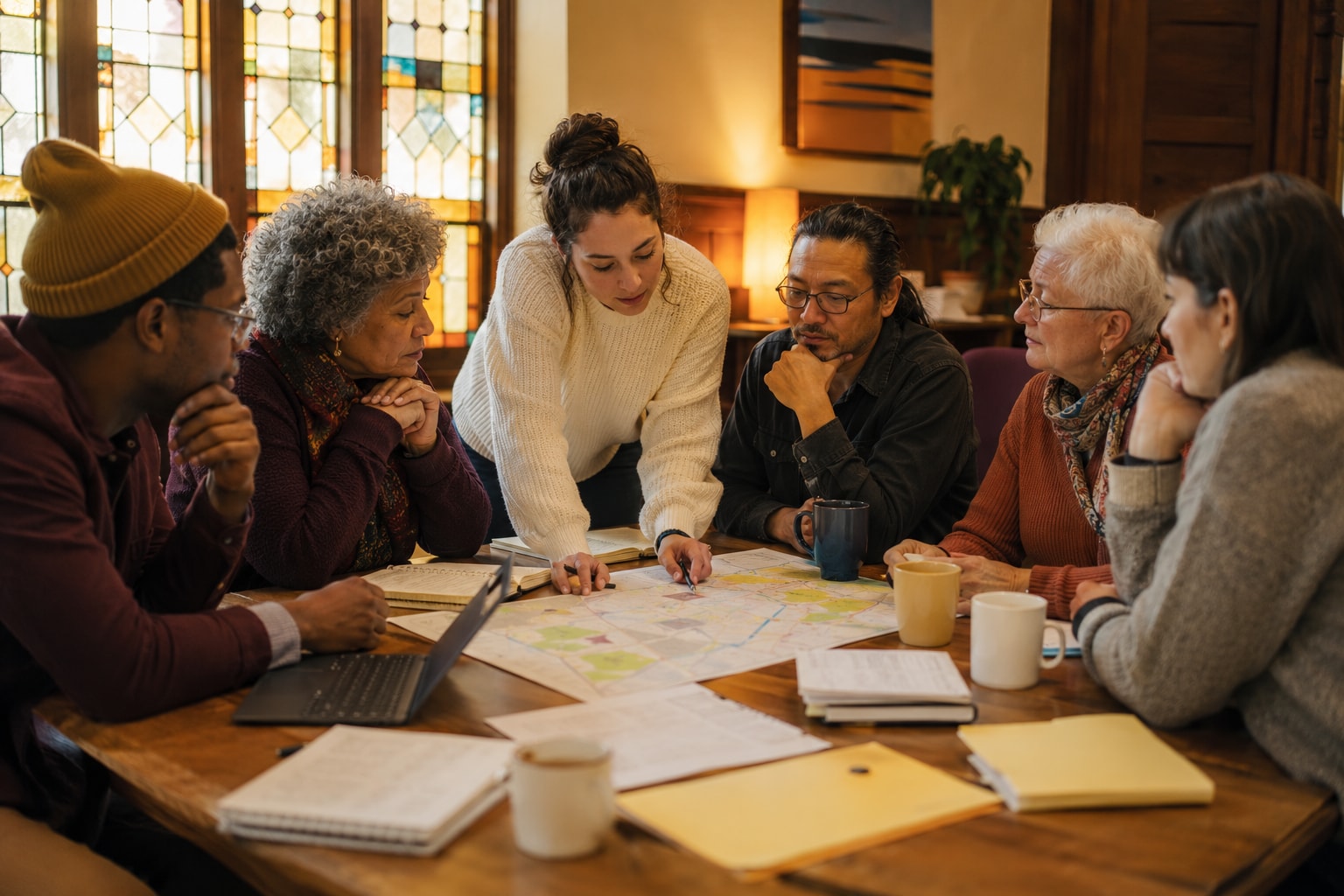
Available reporting confirms continued reductions in Walgreens’ store network, but it does not identify every location or closing date. Faith communities can respond by verifying local facts, listening to affected people, and organizing around confirmed needs rather than speculation.
What Is Confirmed About Walgreens Store Closings in 2026
Walgreens has confirmed that dozens of stores will close in 2026 as the company continues evaluating its store network and operations. This is part of a broader contraction rather than an isolated announcement. Newsweek reported that Walgreens had previously announced plans to close 1,200 stores over three years, including 500 during its 2025 fiscal year.
The scale of the company provides important context. As of January 2026, Walgreens reportedly operated about 8,000 locations and employed approximately 211,000 people. Company-wide figures, however, do not reveal which individual communities will experience a closure.
The responsible conclusion is therefore limited: additional closures are planned, and Walgreens is continuing to review its network. The reporting supports attention and preparation, but it does not support claims that any particular neighborhood store will close unless that location has been separately confirmed.
What the Available Reporting Does Not Tell Us
The available research does not provide a complete list of Walgreens stores scheduled to close in 2026. It also does not supply all affected addresses or a closing date for every location. Readers should not interpret the company-wide plan as evidence that a particular nearby store is included.
This distinction matters for community communication. A national closure figure can establish that the issue is real while still leaving local circumstances uncertain. A social-media post, secondhand account, or assumption based on a store’s appearance should not be presented as confirmation.
Faith communities can name the uncertainty openly: Walgreens is reducing its network, but the status of a specific location must be established through reliable local or company information. If local details remain unavailable, the most accurate statement is that the location’s status has not been verified.
Why Walgreens Is Reducing Its Store Network
The reporting places the closures within a longer period of financial and operational pressure. Newsweek reported that Walgreens executives acknowledged that about 25% of the company’s remaining stores were not profitable. Continued evaluation of the network can therefore be understood partly as an effort to address underperforming locations.
Earlier reporting provides additional background. In 2023, CNN reported that Walgreens reduced its full-year profit guidance amid weaker consumer spending, declining demand for COVID vaccinations, and sluggish sales of nonessential merchandise. CNN also reported that the company’s cost reductions included eliminating more than 500 corporate and U.S. office-support positions.
These details help explain the broader business environment, but they should be handled with attention to dates. The 2023 conditions are historical context, not proof that every 2026 closure has the same immediate cause. Likewise, knowing that a share of the network was unprofitable does not identify which stores fall into that category. The evidence supports a company-level explanation, not a store-by-store financial judgment.
Community Concerns to Assess: Jobs and Service Continuity
Employment is one documented area of concern. Newsweek reported that related layoffs in Texas and Illinois totaled more than 600 people. That figure demonstrates that store and facility reductions can have direct consequences for workers, although it does not establish the number of jobs that every future closure might affect.
Service continuity also deserves careful local attention. Walgreens described its organizational changes in connection with improving service for the millions of customers and patients who depend on its stores. That statement makes continuity a relevant question during the transition, but the available material does not establish specific health-access outcomes or identify replacement services in affected areas.
A local assessment can therefore begin with two bounded questions: Are workers reporting a confirmed employment disruption, and are customers or patients identifying a concrete interruption in services they use? Organizers should record what affected people actually say without turning a possibility into an established community-wide impact.
The aim is not to minimize potential harm. It is to describe harm accurately. Confirmed layoffs, announced service changes, and directly reported needs provide a firmer basis for action than general predictions about what a closure might cause.
A Local Fact-Finding Checklist for Faith Communities
Because the national reporting leaves local details unresolved, a faith community’s first role can be disciplined fact-finding. The following checklist is an editorial framework for responding to the documented uncertainty, not a claim that any particular store is closing.
- Define the location in question. Record the exact store being discussed so reports about different locations are not combined.
- Establish the status. Look for reliable local or company information that explicitly confirms whether the location is affected. If confirmation is absent, label the report unverified.
- Record the timing precisely. Distinguish an announced closing date from an estimate or rumor. The research package does not provide closing dates for every 2026 location.
- Separate company-wide facts from local facts. The three-year plan and continued network review establish a broad trend, but they do not prove the status of one store.
- Listen before defining the problem. Ask affected workers, customers, and patients whether they face a concrete disruption and how they describe it.
- Document only confirmed needs. Keep employment concerns separate from service-continuity concerns, and avoid inferring consequences that people have not reported.
- Correct outdated claims. If a rumor is disproved or circumstances change, update community communications promptly.
This process creates a clear threshold for organizing: move from monitoring to response when credible information establishes a local change and affected people identify needs that the community can realistically address.
Reflection Questions Before Choosing a Response
Once local facts are confirmed, congregations and faith-based groups can pause before selecting a response. These prompts are offered for reflection and are grounded in the reported concerns about employment and service continuity:
- Whose dignity and material well-being are most directly involved?
- Have workers, customers, and patients been invited to describe their own needs, or are others speaking for them?
- Which concerns are documented, and which remain possible but unverified?
- Is immediate practical support needed, or are people asking for a longer-term public response?
- What capacity does the congregation actually have, and what commitments can it sustain?
- Could public messaging expose affected people, overstate the evidence, or spread anxiety before details are confirmed?
- How will the group revise its response if new information changes its understanding?
These questions do not predetermine whether a congregation should organize a campaign, offer direct support, convene a conversation, or simply continue monitoring. They help keep any decision connected to confirmed circumstances and the voices of people directly affected. A response rooted in dignity should leave room for those people to set priorities rather than treating a national headline as a complete account of local need.
Historical Context Without Conflating Earlier Closures With 2026
Walgreens’ network reductions predate the current 2026 reporting. In 2023, CNN reported that the company was closing a combined 450 locations in the United States and the United Kingdom. The same period included other cost-cutting measures, such as the elimination of more than 500 corporate and U.S. office-support roles.
That history shows that the current contraction follows earlier reductions. It does not identify the stores involved in the 2026 plan. The figure of 450 locations belongs to the earlier report and should not be added to, substituted for, or presented as a list of 2026 closures.
When discussing this background, include the year and geographic scope. A clear formulation is that Walgreens reported earlier U.S. and U.K. closures in 2023 and has since continued reducing its network. This preserves useful context without making the earlier announcement evidence about the fate of a present-day local store.
How to Proceed Without Spreading Unverified Claims
A careful response begins with a modest sequence: verify the local closure, listen to people directly affected, document confirmed employment or service concerns, and then decide whether action is warranted. National reporting can explain why communities are paying attention, but it cannot replace local confirmation.
In public statements, separate three categories: what Walgreens or reliable reporting has confirmed, what affected people have directly reported, and what remains unknown. Include dates when referring to historical information, especially the 2023 report about 450 U.S. and U.K. closures, so it is not mistaken for the 2026 plan.
If a local closure is confirmed, let identified needs shape the response. If it is not confirmed, communicate that uncertainty and avoid presenting preparation as proof of an impending closure. The central call to action is simple: verify through reliable local or company information, listen to workers and service users, and act on evidence rather than speculation.
Disclosures and limitations
- This article was prepared with AI assistance from the supplied Content Plan and Research Package and should receive human editorial review before publication.
- Material claims are attributed to the supplied reporting from Newsweek and CNN through the listed source IDs. No outside research, personal testing, interviews, or firsthand product experience was used.
- The available sources do not provide a complete list of 2026 closures, all affected addresses, or every closing date. They also do not independently document faith-organizing methods, replacement services, or specific local health-access outcomes.
- This article contains no product recommendations or affiliate links. No commercial relationship influenced its guidance.