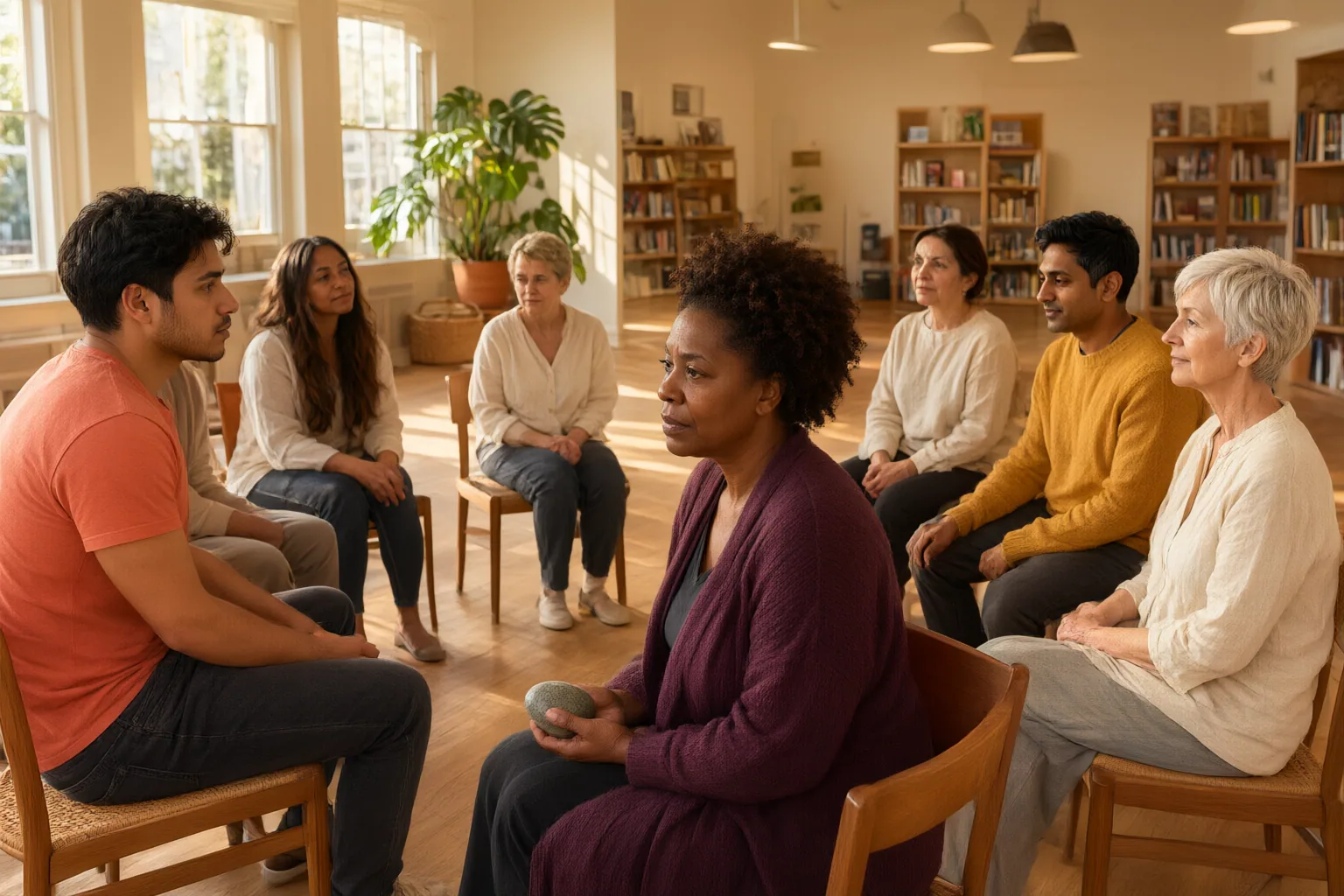
Congregations can learn practices of structured listening, shared agreements, reflection, and relationship-building from community-led restorative justice circles. They should also recognize the cultural lineage and limits of this work, especially when serious harm calls for experienced facilitation and community partnership.
What Community-Led Restorative Justice Circles Are
Community-led restorative justice circles are intentional dialogue spaces, not simply informal conversations arranged in a circle. Restorative Justice California describes them as carefully constructed spaces that support understanding, empowerment, and connection. Harm to Healing Collaborative similarly emphasizes facilitation, shared agreements, and commitments to respect, honesty, and collaboration.
Their structure gives each participant time to speak without interruption. Slowing the exchange can create room for reflection, truth-telling, deep listening, and meaningful connection. The approach also welcomes difficult emotions while balancing individual and group needs and respecting each person’s own path toward healing.
Congregations should understand this practice within its wider context. The Community Playbook connects circle practices to Indigenous peacemaking traditions. Acknowledging that lineage helps prevent faith communities from presenting circles as a newly invented congregational technique.
Lessons Congregations Can Apply to Community Life
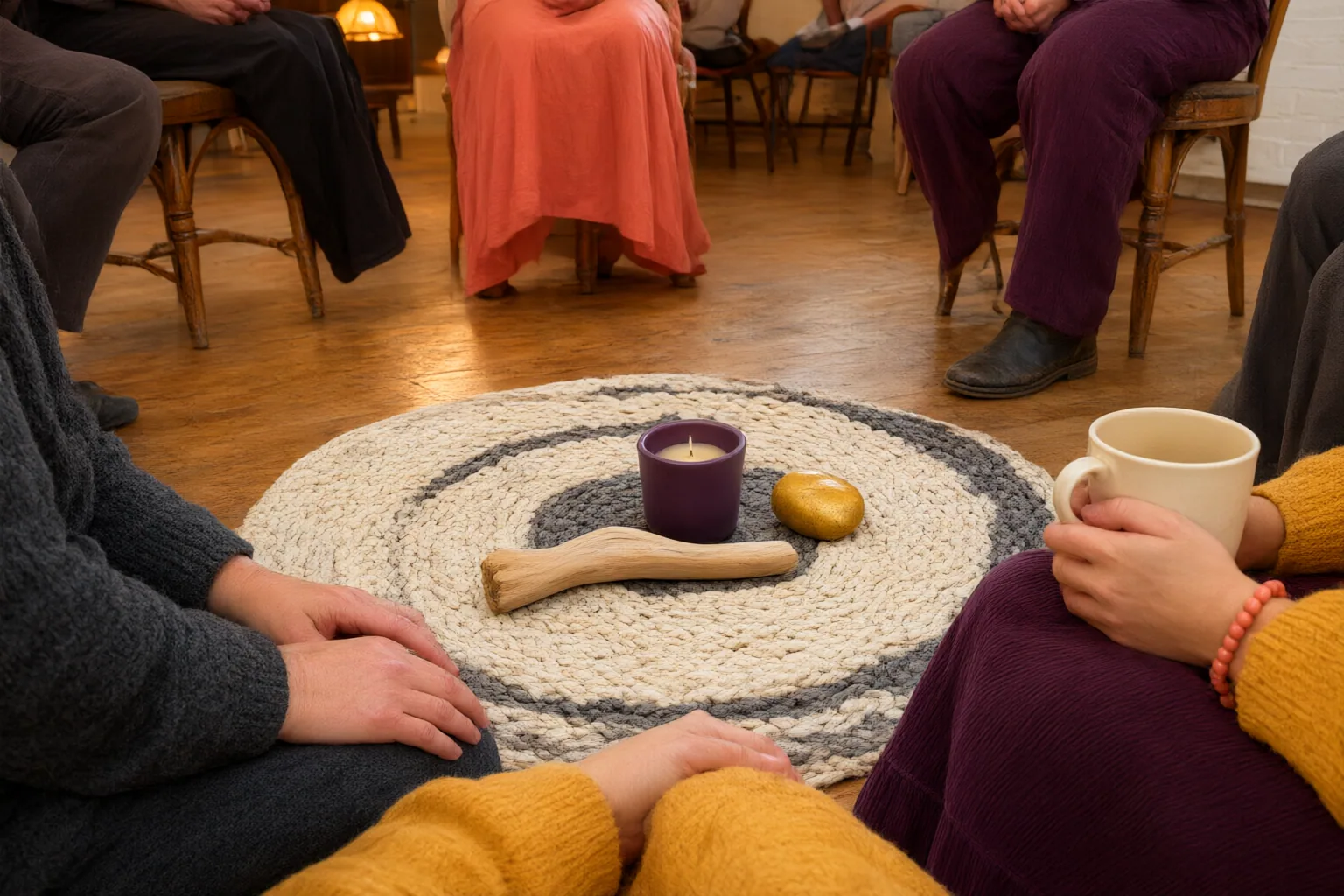
Several circle principles can inform congregational gatherings without being represented as full restorative processes. Leaders can establish shared agreements before a conversation, invite honest speech, protect each person’s opportunity to speak without interruption, and leave deliberate space for listening and reflection. These practices can support connection and shared understanding.
Congregations can also make room for difficult realities without expecting one participant to manage another participant’s emotions. A careful structure should consider both individual and group needs, while collaboration should shape how people participate and make decisions together.
These lessons are practices to study, not evidence of facilitator competence. Using a talking order or shared agreement does not by itself reproduce the supported, intentional model described by community practitioners. Humility means being clear about whether a gathering is for reflection and relationship-building or is attempting a more demanding response to harm.
Know the Difference Between Building Relationships and Repairing Harm
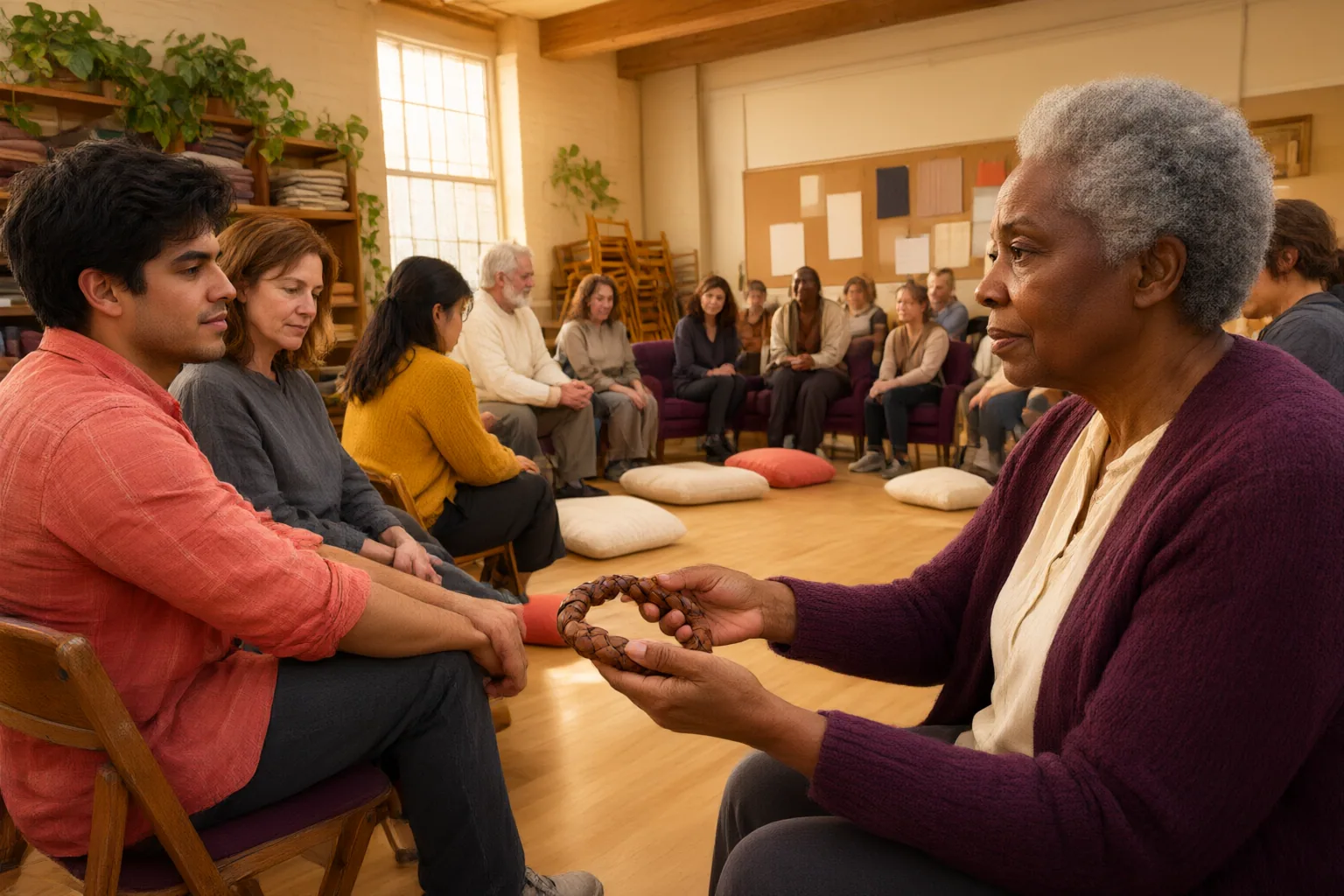
Not every circle is a harm-repair circle. The sources distinguish proactive relationship-building and dialogue across differences from applications involving conflict, accountability, reentry, or the restoration of harm. That distinction should determine the level of preparation and support a congregation seeks.
A relationship-building gathering may focus on connection, shared experiences, or strengthening a team. A process responding to harm asks more: the model described by Harm to Healing Collaborative includes facilitation, shared agreements, supported participation, accountability, and collaborative decisions about repair. An unstructured invitation to “talk it out” does not supply those elements.
The need for support becomes especially important when a process includes violence, reentry, or people affected by the criminal justice system. The supplied sources do not establish that an untrained congregation is qualified to facilitate such work. Restorative Justice California presents circles within a broader range of restorative services and invites organizations to explore partnership or learn more about facilitation. That offers congregations a responsible pathway: approach experienced practitioners instead of treating brief exposure as sufficient preparation.
Conclusion
Congregations can carry lessons of attentive listening, honest speech, thoughtful agreements, reflection, and relationship into community life. Doing so responsibly requires respect for the Indigenous peacemaking traditions associated with circle practice and honesty about the congregation’s competence.
Before convening any circle involving serious harm, identify an experienced local restorative justice organization. Learn how it approaches facilitation, accountability, supported participation, and community relationships, then explore a partnership rather than proceeding alone.
Disclosures and limitations
- This article was prepared with AI assistance from the supplied practitioner and organizational sources; those webpages were undated and were not independent guidance.
- No products or affiliate recommendations are included.
Related reading
Sources
- Restorative Justice Circles — Community Playbook — communityplaybook.org
- Community Circles — Restorative Justice California — Restorative Justice California
- Community Restorative Justice Circles – Harm to Healing Collaborative — Harm to Healing Collaborative
- Restorative Justice California — Restorative Justice California