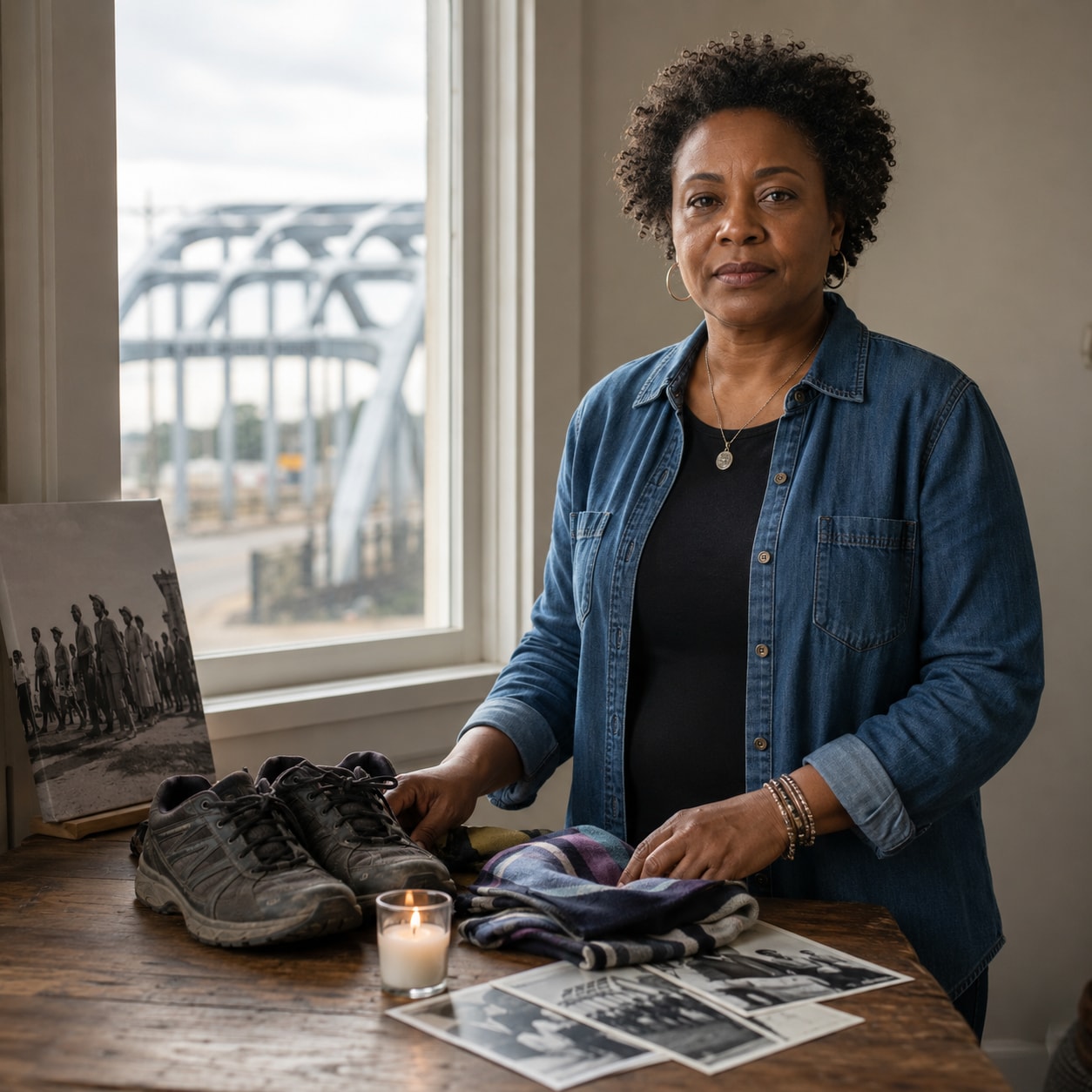
A practical framework for connecting historically grounded learning, respectful reflection, community participation, and achievable public action.
Why Selma Commemoration Should Connect Memory and Public Witness
A Selma commemoration can do more than recall a famous event. It can connect historical learning with reflection, participation, and an achievable form of public witness. That broader approach matters because the voting rights movement in Selma rested on sustained local organizing as well as nationally recognized leadership and events.
Respect should shape the entire gathering. General commemoration guidance from the United States Holocaust Memorial Museum emphasizes honoring survivors, victims, and suffering while making deliberate choices about themes, formats, testimony, and educational resources. Applied here, those principles support a gathering that treats the people and history being remembered with care rather than using them merely as a backdrop.
Public witness gives the gathering a forward-looking dimension. Faith Action Network identifies options such as educational events, interfaith forums, voter registration, letters to elected officials, advocacy days, and rapid-response participation. Organizers can therefore build a clear pathway: learn the history, reflect on its meaning, participate as a community, and select one concrete action that the group can carry forward.
Build the Historical Grounding Beyond a Single Day or Famous Leader
A historically grounded commemoration should not begin and end with Bloody Sunday, Martin Luther King Jr., or federal legislation. Teaching for Change argues that such a narrow, top-down account can obscure the local activists, young people, and grassroots organizing that made the Selma voting rights movement possible.
One important starting point is the organizing that preceded the nationally familiar events. According to Teaching for Change, Amelia Boynton Robinson, Samuel William Boynton, and other Black activists established the Dallas County Voters League during the 1930s. Including this earlier work helps participants understand that the movement did not suddenly emerge at the moment it gained national attention.
The same source describes another layer of sustained organizing. In 1963, Student Nonviolent Coordinating Committee staff members Colia Lafayette and Bernard Lafayette came to Selma and worked with local activists. Their work included citizenship-school instruction, door-to-door outreach, and voter registration. These activities show how education, personal contact, and practical civic participation operated together.
Organizers can use these documented examples to structure the learning portion of a commemoration. A timeline can begin with the Dallas County Voters League and then move to the collaboration between local activists and SNCC organizers. Discussion can focus on the distinct roles of civic education, neighborhood outreach, and voter registration. This framing keeps well-known events in view while placing them within the longer organizing history that gave them context.
The central lesson is not that prominent leaders or landmark moments should be omitted. It is that they should be presented as part of a larger movement sustained by local relationships and long-term work. That balance gives participants a stronger basis for considering what collective action requires.
Plan a Respectful Theme, Format, and Learning Experience
Begin by choosing a theme narrow enough to guide every part of the gathering. Possible emphases supported by the historical material include long-term local organizing, civic education, door-to-door engagement, or voter registration. A clear theme can help organizers decide which history to present, which questions to ask, and which action to propose afterward.
Next, select a format suited to the group and setting. The United States Holocaust Memorial Museum’s general commemoration resources identify formats, theme selection, personal testimony, and educational materials as important planning elements. They also emphasize respect for survivors, victims, and suffering. Although those resources address a different historical context, these planning principles offer a useful framework for making careful choices about a Selma commemoration.
Personal testimony, when available in the chosen educational materials, should provide historical insight rather than serve as decoration. Organizers should give it enough context for participants to understand who is speaking and how the account relates to the theme. Educational material should likewise reinforce the documented history, including the contributions of local activists and SNCC organizers.
A simple gathering might combine a concise historical presentation, a selected testimony or educational resource, guided reflection, and an explanation of the group’s next action. A longer program can create additional space for discussion and participation. In either case, the format should serve the historical and ethical purpose of the gathering.
Before finalizing the program, review it for balance. Does it acknowledge long-term local organizing? Does it avoid reducing the movement to a single day or a handful of famous people? Does it treat suffering with respect? Do the readings, activities, and proposed action all support the selected theme? These questions turn broad commemorative principles into practical planning decisions.
Prepare for a Visit to the Selma to Montgomery Historic Trail
The National Park Service describes the Selma to Montgomery National Historic Trail as a 54-mile march route with three visitor centers along it. Groups planning an on-site commemoration can use that documented geography to decide whether their visit will focus on one location or engage more of the route.
Ask about orientation when planning a group visit. The National Park Service states that rangers can usually provide a brief introduction of approximately five to ten minutes upon request. The presentation can cover the march’s background, people, places, and events, and can be adjusted to a group’s needs and level of knowledge. Organizers can use that option as an introduction, then connect it to their own discussion or reflection.
Access details require special attention. The National Park Service page, updated January 17, 2026, reported that the Selma Interpretive Center was closed for renovations and that a temporary location was operating at the Selma Welcome Center. Because this information is tied to a dated page update, visitors should confirm the latest location and access details before traveling rather than assuming that the arrangement remains unchanged.
When contacting the site, organizers can state the group’s size, knowledge level, learning focus, and desired visit date. They can also ask whether the short orientation is available and determine which location fits the planned theme. Once details are confirmed, participants should receive the correct meeting point and a clear outline of how the visit connects to the commemoration’s learning, reflection, and action components.
Create Space for Reflection and Community Participation
Reflection is most useful when it remains connected to the history presented. After learning about the Dallas County Voters League, local activists, or collaboration with SNCC organizers, participants can consider what the examples reveal about education, relationships, and sustained civic participation. The aim is to process the material rather than move immediately from a historical presentation to an action announcement.
Participation should also reflect the group’s existing knowledge. The National Park Service notes that its brief group introductions can be adapted to visitors’ needs and knowledge levels. Organizers can follow the same principle by providing more historical context for newcomers and more focused discussion prompts for participants already familiar with the basic account.
The commemoration format may incorporate testimony and educational material, following general planning principles identified by the United States Holocaust Memorial Museum. Whatever the format, facilitators should preserve the context of the people and suffering being remembered. A reading, discussion, or period of reflection should reinforce the gathering’s stated theme rather than stand apart from it.
Close this portion by inviting participants to identify the connection between the history and the community’s proposed public witness. This creates a visible bridge between remembrance and participation while leaving the group with a shared understanding of why the selected action belongs in the program.
Turn Commemoration into Concrete Public Witness
Public witness becomes manageable when a group chooses a defined action instead of an open-ended commitment. Faith Action Network lists several forms of participation available to faith communities: educational events, interfaith public forums, voter registration, letters to elected officials, advocacy days, and rapid-response teams.
An educational event can extend the learning beyond those who attended the original commemoration. An interfaith public forum can create a shared setting for discussion and participation among multiple communities. Voter registration offers a direct connection to the civic work highlighted in the history of the Selma movement. Letters to elected officials and participation in an advocacy day provide structured ways to communicate about public concerns. A rapid-response team creates a form of participation for communities prepared to organize around emerging needs.
The action should fit the group’s capacity and the gathering’s theme. A congregation focusing on citizenship education might select an educational event. A gathering centered on voter registration history might choose a voter-registration activity. A coalition seeking broader community participation might consider an interfaith forum. These pairings keep action connected to the learning that preceded it.
Before the commemoration ends, name the selected action, identify who is responsible, and state what follow-through is expected. If the group is not ready for a large initiative, it can begin with one bounded step, such as planning a single forum or organizing one letter-writing effort. The purpose is to create a concrete continuation of the gathering, not simply to conclude with a general invitation to act.
A Practical Planning Checklist for Congregations and Community Groups
Use this sequence to move from intention to a coherent gathering:
1. Define the theme. Choose a focus that can connect historical learning, reflection, and public witness. 2. Build the historical foundation. Include the long-term work of local activists, the Dallas County Voters League, and the collaboration between local organizers and SNCC staff through citizenship education, door-to-door outreach, and voter registration. 3. Choose a respectful format. Decide how educational material, testimony, discussion, and reflection will support the theme while respecting the people and suffering being commemorated. 4. Confirm visitor information. If the gathering includes the Selma to Montgomery National Historic Trail, verify current locations and access arrangements. The National Park Service page updated January 17, 2026, reported a renovation closure at the Selma Interpretive Center and a temporary operation at the Selma Welcome Center. 5. Ask about group orientation. Determine whether a ranger’s approximately five-to-ten-minute introduction is available and share the group’s needs and knowledge level. 6. Prepare participants. Explain the theme, historical context, gathering format, and intended connection to public witness before the event. 7. Select one achievable action. Consider an educational event, interfaith public forum, voter-registration activity, letter-writing effort, advocacy day, or rapid-response participation. 8. Assign responsibilities. Identify who will confirm logistics, facilitate learning and reflection, coordinate the action, and communicate next steps. 9. Document follow-through. Record the chosen action, responsible participants, and next commitment so the public-witness component continues after the gathering.
A practical starting point is to choose one learning activity, one reflective practice, and one concrete community action. Confirm current visitor information where relevant, assign responsibilities, and make the next step clear before participants leave.
Disclosures and limitations
– This article was prepared with AI assistance from the supplied Content Plan and Research Package, then synthesized without claims of personal attendance, interviews, product use, or independent testing. – Factual material is limited to the supplied National Park Service, Teaching for Change, Faith Action Network, and United States Holocaust Memorial Museum source summaries. Current visitor arrangements should be confirmed because the supplied National Park Service access information is dated January 17, 2026. – No products are recommended, and no affiliate relationship or commercial compensation is represented in this article.
Sources
– Visitor Centers – Selma To Montgomery National Historic Trail (U.S. National Park Service) — nps.gov – Talk:Controversies of Mahmoud Ahmadinejad – Wikipedia — en.wikipedia.org – Days of Remembrance Resources – United States Holocaust Memorial Museum — ushmm.org – Our Network — Faith Action Network – The Selma Voting Rights Struggle: 15 Key Points from Bottom-Up History and Why It Matters Today – Teaching for Change — Teaching for Change – We Charge Genocide – The 1951 Black Lives Matter Campaign – Mapping American Social Movements Project — depts.washington.edu – Will Israel Attack Iran Or Will Iran Hit First? — sonar21.com – UN calls for investigation into killings near Gaza aid site — bbc.com – Certificate in Faith, Food, and Environmental Justice | Duke Divinity School — divinity.duke.edu – Holocaust Memorial Ceremony 2025| United Nations – YouTube — youtube.com