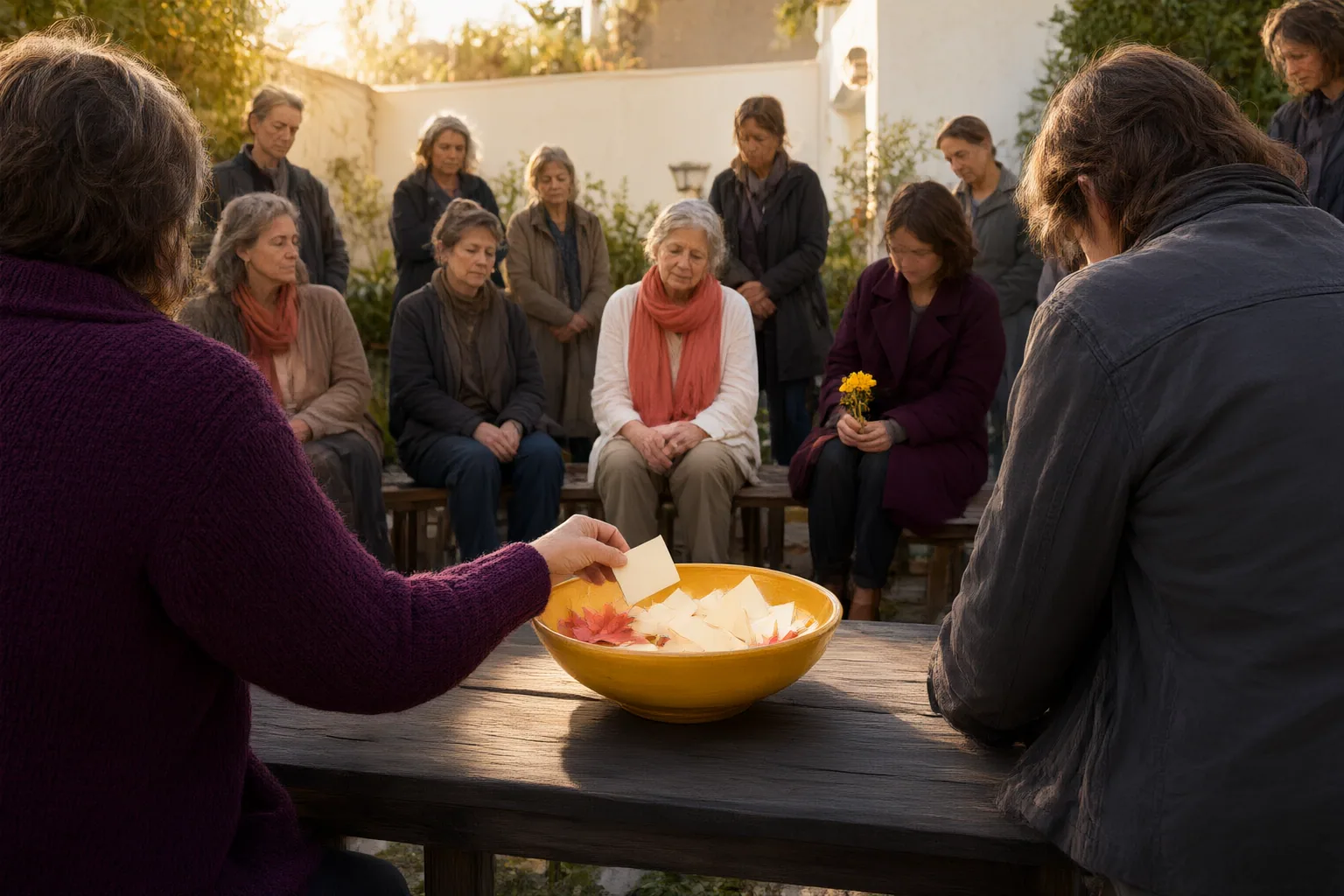
A communal ritual of lament can name a campaign loss or tragedy, honor grief through stories and memories, and mark a transition without pressuring participants to find closure. The form should be adapted to the affected community and offer genuinely voluntary ways to participate.
Begin With the Loss, the People, and the Purpose
Start by naming what happened and who has been affected. Then decide whether the gathering is primarily for mourning, remembrance, transition, or a combination of these purposes. This clarity can guide choices about language, leadership, setting, and symbolic actions.
Adaptation is practical guidance, not a universal ritual rule. BEYN KODESH l’CHOL, a Jewish community, facilitates funerals, memorial services, unveilings, and rituals for transitions. Its example shows that rituals can respond to particular losses and passages, but its Jewish context should be preserved rather than applied wholesale to every faith community. Organizers can invite a small, representative group to identify the community’s needs and determine which traditions or practices are appropriate.
Build the Ritual Around Stories, Memories, and Continuing Bonds
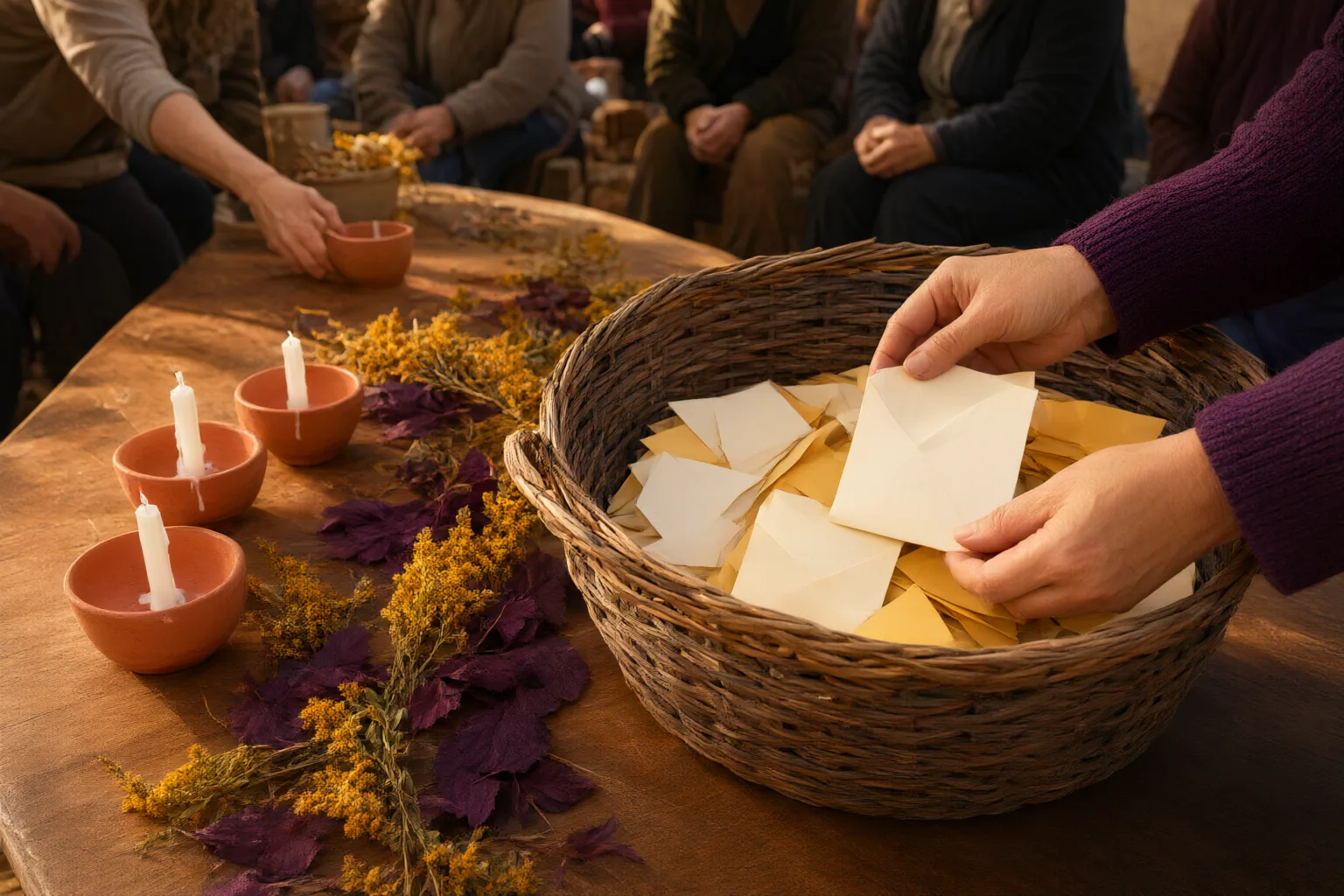
Remembering Practices emphasizes stories, memories, and an ongoing relationship with someone who has died, rather than making “letting go” or closure the expected goal. A faith community can draw cautiously from that principle when shaping space for collective grief.
One possible editorial framework is to welcome participants, name the loss, allow silence, invite stories or memories, offer an optional symbolic action, and close by acknowledging that grief may continue. For a campaign loss, participants might reflect on people, relationships, or commitments connected with the effort; after a tragedy, the focus may be remembrance. These are suggested choices, not a sourced congregational model. Avoid language that declares the community healed or the grief complete. A closing can instead honor what participants are carrying and mark the gathering as one moment within an ongoing process.
Make Participation Flexible and the Gathering Inclusive
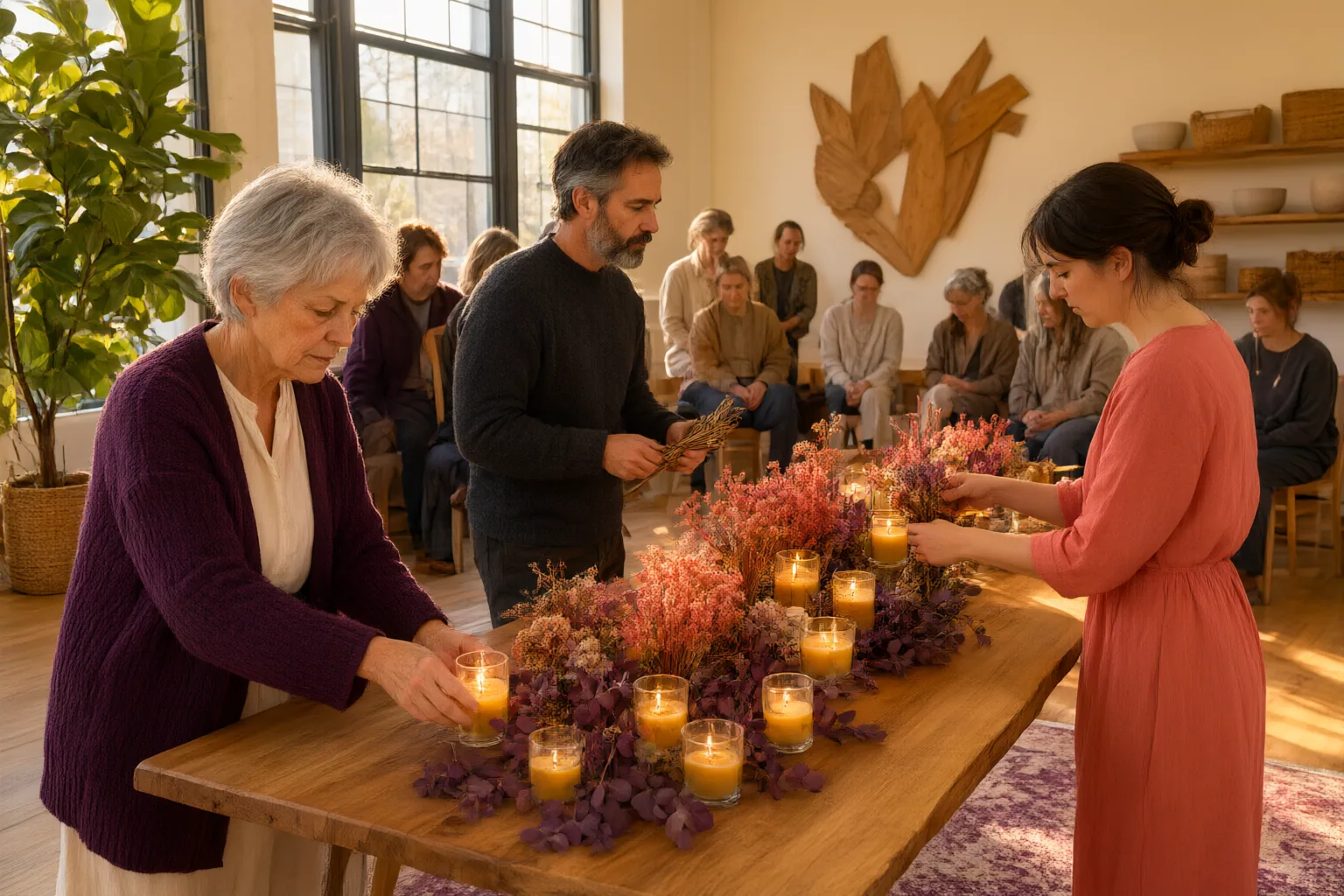
Offer several ways to take part: speaking, listening, sharing a written memory, joining a symbolic action, or declining an activity. Explain those choices at the beginning so that silence is treated as participation rather than absence. Organizers can also review the language and format with people whose identities, abilities, or relationships to faith differ.
BEYN KODESH l’CHOL explicitly welcomes unaffiliated and secular Jews, interfaith families, Jews of color, queer and transgender Jews, and Jews with disabilities. That statement belongs to its particular Jewish setting; it is not proof that one format will work for every community. Still, it illustrates the importance of naming who is welcome. Remembering Practices also offers conversations, training, publications, and community space focused on stories, rituals, and continuing connections, showing that remembrance can take more than one form.
Conclusion
A careful path begins by naming the loss, identifying the people affected, choosing the gathering’s purpose, and creating flexible opportunities for remembrance and transition. The available sources support these general grief and ritual principles, but they do not document outcomes or provide a tested congregational plan specifically for campaign losses.
Convene a small, representative planning group. Ask it to choose the ritual’s purpose and one first element—such as a welcome, a period of silence, or an invitation to share memories—then schedule a gathering with clear options to participate or opt out.
Disclosures and limitations
- This article was prepared with AI assistance from the two organizations identified in the source notes. Suggested planning steps are editorial guidance; the sources provide no outcome evidence or specific congregational model for lament after a campaign loss.
Related reading
- Spiritual Care for Courageous, Sustained Action
- How Congregations Can Build Sabbath Practices for Sustained Justice Work
Sources
- Home | Remembering Practices — Remembering Practices
- Ritual Facilitation — BEYN KODESH l’CHOL — BEYN KODESH l’CHOL