
Congregations can make Sabbath practical by choosing a shared rhythm of stopping, resting, delighting, worshiping, and gathering, with clear boundaries and a manageable weekly or monthly cadence.
Why Sabbath Needs to Become a Shared Practice
Sabbath can remain abstract unless people experience it through repeatable practices. Practicing the Way presents Sabbath as a 24-hour period set aside to stop, rest, delight, and worship, while Journey Films likewise emphasizes practice rather than discussion alone. This approach may be especially relevant where people face chronic exhaustion, emotional strain, or spiritual stagnation.
Congregations can apply these ideas to their justice commitments by creating protected time that people practice together. However, the available sources do not study whether Sabbath makes participation in justice work longer or more effective. It should be presented as spiritual care and a congregational practice, not as a proven solution to organizer fatigue or movement sustainability.
Build the Rhythm Around Stop, Rest, Delight, and Worship
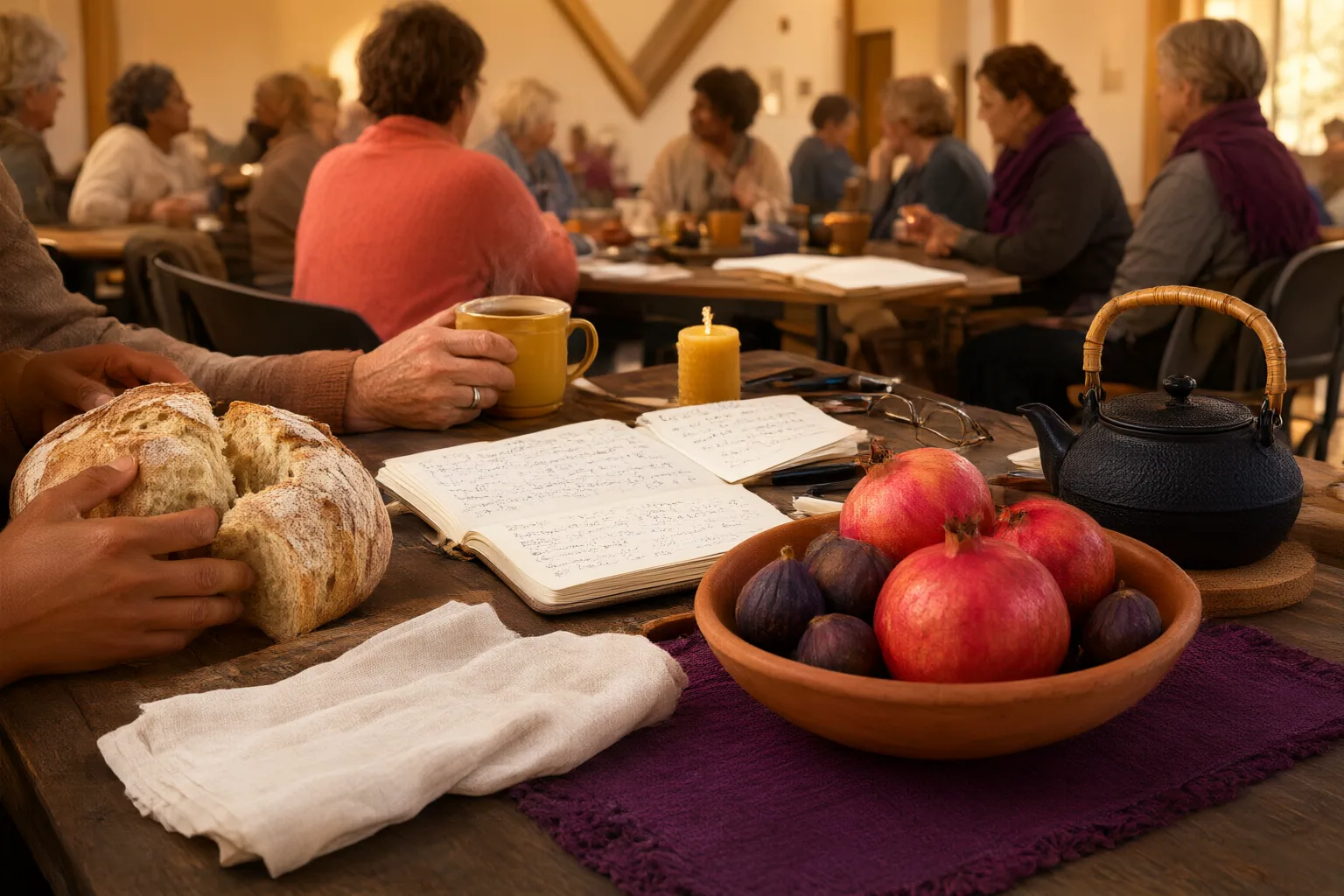
A congregation can organize its Sabbath rhythm around four movements: stop, rest, delight, and worship. “Stop” means naming the work, obligations, technologies, or pressures that participants will set aside. Practicing the Way specifically recommends identifying what people will not do during protected Sabbath time, recognizing that both internal and external pressures can challenge those boundaries.
“Rest” creates space apart from ordinary work. “Delight” makes room for activities that participants receive as life-giving rather than productive. “Worship” turns attention toward shared spiritual practice. These movements can form one gathering or become a four-session sequence supported by discussion, exercises, readings, and reflection. The framework gives congregations structure without requiring every participant to observe Sabbath in precisely the same way.
Choose a Format and Cadence the Congregation Can Practice
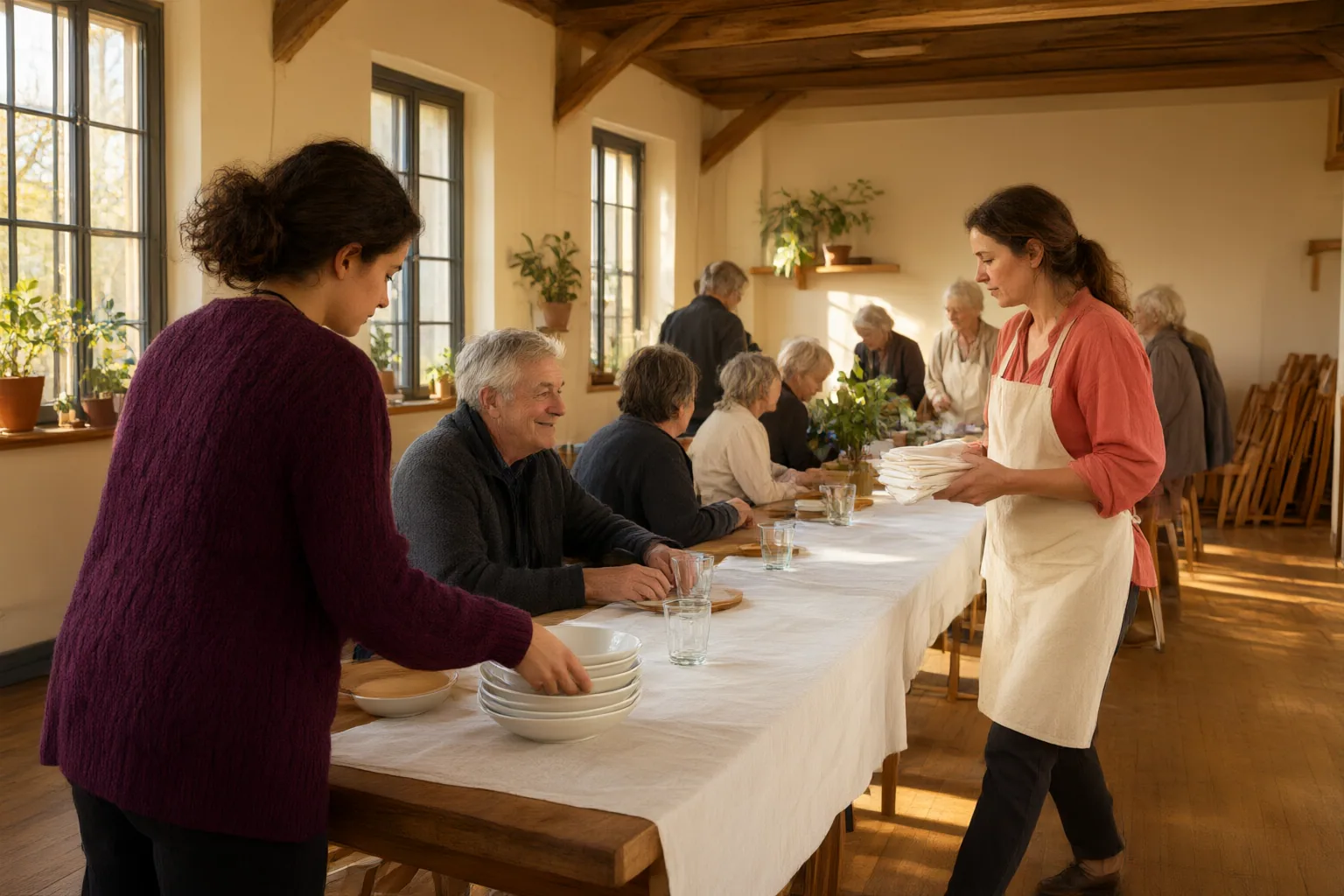
The sources offer several adaptable formats. Practicing the Way says its material can be used by small groups, larger course-style gatherings, churchwide teaching series, or small cohorts. Journey Films suggests practices such as weekly worship, devotional activities, communal meals, technology breaks, days without work, community service, and gatherings with family or friends.
A congregation might begin with a weekly rhythm, including a 24-hour Sabbath or a recurring worship practice. It could instead choose a monthly technology break, work-free day, meal, or service activity. The sources support both weekly and monthly options but do not establish that one cadence is better. Leaders can choose a format that participants can practice consistently, state its boundaries clearly, and provide a shared opportunity to reflect on the experience.
Conclusion
Begin with a modest congregational pilot. Invite a small group to select one practice, decide what participants will set aside, and choose either a weekly or monthly cadence. Practice it together for a month, then gather to discuss what was workable, what pressures disrupted the boundary, and what should be continued or adjusted.
This experiment should not promise better justice-work outcomes, because the sources provide practice guidance rather than outcome data. Its value is as a concrete way to move Sabbath from an idea into shared experience. Invite one small group this week to choose its first manageable Sabbath commitment.
Disclosures and limitations
- This article was prepared with AI assistance using the two supplied organizational sources; both pages were undated, and their guidance was synthesized within the stated evidence limits.
- No products or affiliate links are recommended in this article.
Related reading
- Spiritual Care for Courageous, Sustained Action
- Moral Injury in Justice Work: Signs and Support Practices for Faith-Based Organizers
Sources
- The Sabbath Practice — Practicing the Way — practicingtheway.org
- Sabbath Practices — Journey Films — Journey Films