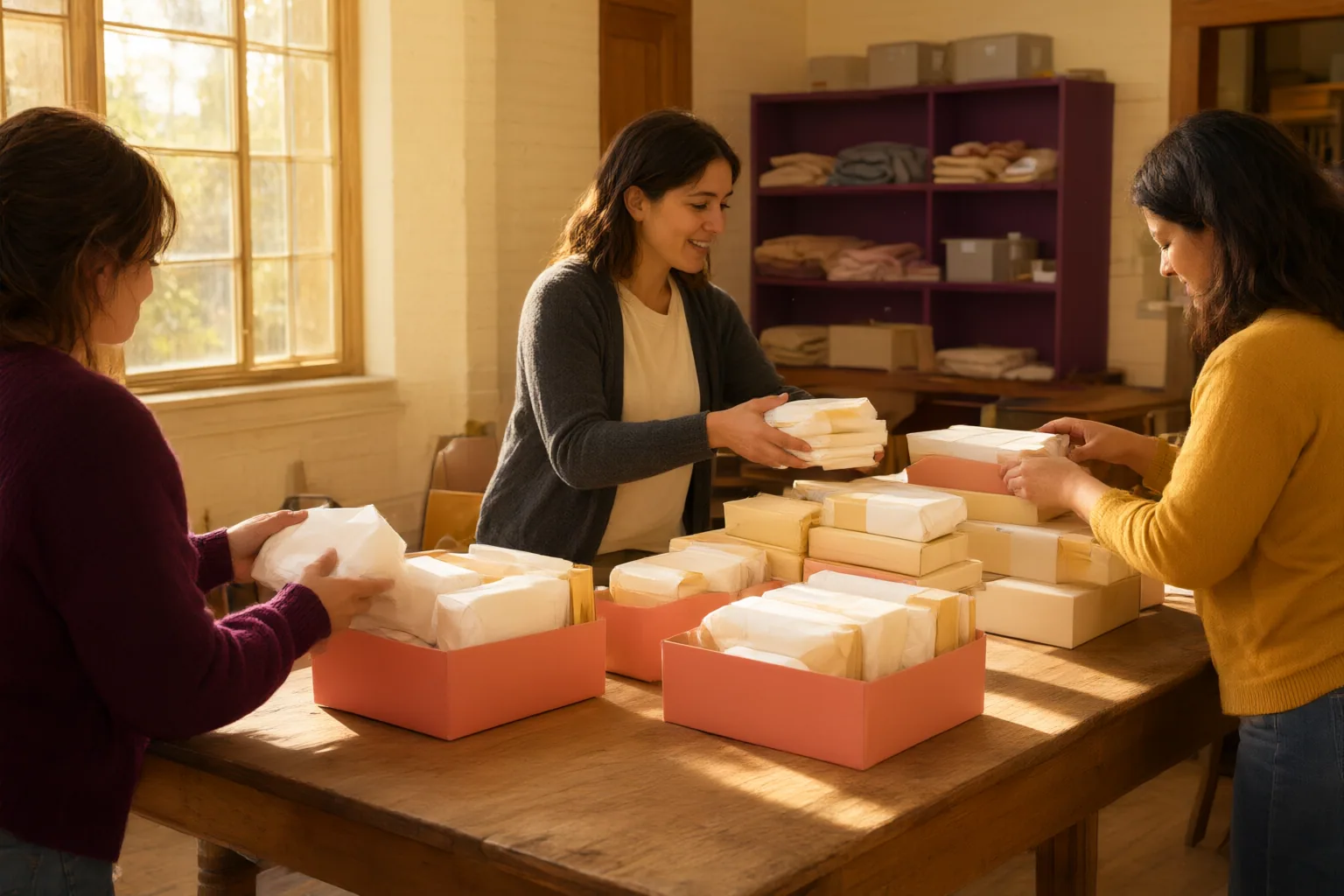
Congregations can reduce barriers to menstrual products by listening to local needs, partnering with trusted community organizations, placing supplies in accessible locations, and connecting distribution with education and supportive conversation. A small pilot with clear responsibilities can provide a practical starting point.
Understand the barriers before choosing a response
Menstrual-product access involves more than having pads or other supplies available. USOW defines period poverty as inadequate access to menstrual-hygiene tools and education, including products, washing facilities, and waste-management options. Cost and stigma can further limit access or make it difficult to discuss unmet needs.
USOW identifies students, people with low incomes, transgender people, and unhoused people among those who may face greater challenges obtaining products and reliable menstrual-health education. Before selecting a project, a congregation should listen to people who may use it and to organizations already serving them. Ask about preferred products, privacy, physical accessibility, washing and disposal needs, and locations people already trust. This helps the response address local conditions instead of assuming that one distribution model will work for everyone.
Build partnerships around trusted community access points
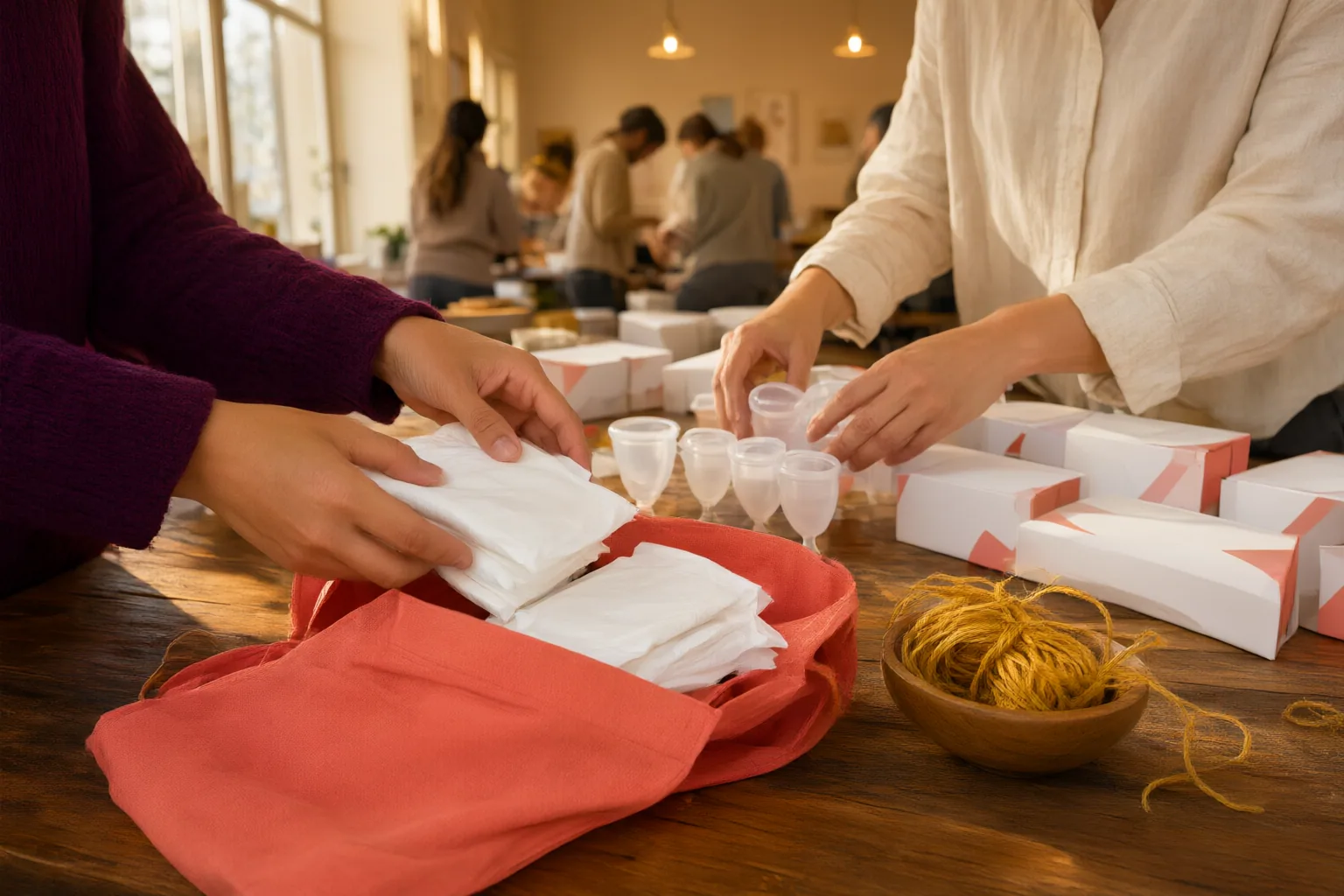
A useful partnership begins with organizations and spaces that already have community relationships. USOW highlights a toolkit developed with The Flow Initiative that describes working with libraries and other shared spaces to provide menstrual products. Depending on local needs, a congregation might contribute supplies, volunteers, storage, or fundraising while a partner helps determine where and how products should be offered.
The Pad Project describes a similarly local approach: it works with established organizations and grassroots NGOs on programs that may include pad-making machines, washable-pad initiatives, workshops, and community dialogue. Its examples are not a universal template, but they show why partners should shape the project together. Agree on the intended users, suitable products, access points, privacy practices, and each organization’s role. A trusted partner can also help the congregation avoid imposing a program that does not fit the community’s circumstances.

Pair product distribution with education and a sustainable plan
The United Church of Christ’s menstrual-justice toolkit offers several congregation-level options: assemble period packs, stock church bathrooms, supply a community care cupboard, fundraise, or seek matching support where available. The toolkit also includes pack instructions and links to educational resources, statistics, and videos. Congregations can use these options to select a manageable pilot rather than trying to launch every activity at once.
Distribution should be connected to accurate education and supportive dialogue. The Pad Project says menstrual products should be paired with comprehensive sexual and reproductive health and rights education, with established local partners hosting workshops and conversations suited to community needs.
Sustainability also requires named responsibilities. Partners should decide who purchases or receives supplies, checks inventory, replenishes each location, manages funds, and gathers community feedback. A 2024 UCC article reported a $180 Church World Service materials package for 12 kits and a $250 matching grant for eligible congregations at that time. Treat those figures as dated examples and verify current prices, eligibility, and availability before budgeting.
Conclusion
Start with one trusted local partner and a focused conversation about unmet needs. Identify the products people prefer, the locations they can reach comfortably, and any education, washing, disposal, or privacy considerations. Then choose one manageable approach—such as a period-pack project, a stocked bathroom, or supplies in a shared community space—and document who will stock and replenish it.
Set a time to review feedback with the partner and adjust the pilot to local conditions. The concrete next step is simple: contact one community organization or library, ask what would be useful, and agree on a small pilot with clear responsibilities.
Disclosures and limitations
- This article was prepared with AI assistance using only the supplied research from the United Church of Christ, USOW, and The Pad Project. Program details, costs, and funding availability should be confirmed with the relevant organizations before action.
Related reading
Sources
- How We Help – The Pad Project — The Pad Project
- PERIOD POVERTY – USOW — USOW
- 'Menstrual Justice in Action' toolkit helps congregations eradicate period poverty – United Church of Christ — United Church of Christ